

India alone generates over 62 million tonnes of waste every year (CPCB report), and nearly 60% of it is organic. But here’s the shocking part—most of it still ends up in landfills, releasing harmful methane gases. So, the big question in 2025 is this: Should households, communities, and businesses stick with traditional composting or switch to a modern Organic Waste Converter (OWC)?
In this blog, we’ll explore both traditional composting and advanced composting machines to help you understand which solution is more relevant for today’s world.
What is Traditional Composting?
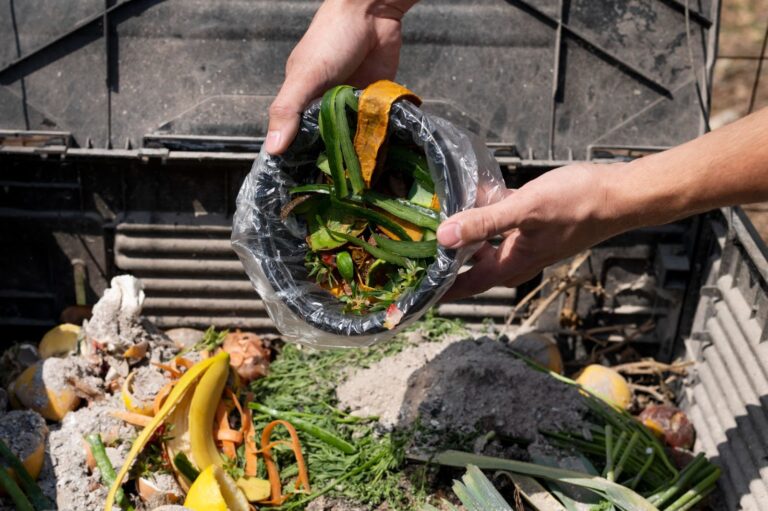
For centuries, composting has been a natural way of recycling kitchen and garden waste. The method is simple: collect organic waste, dump it in a pit or bin, and let nature do the work. Microorganisms break down the waste into nutrient-rich compost, which can be used to improve soil health.
Pros:
- Low cost
- Simple and chemical-free
- Suitable for rural settings with ample space
Cons:
- Slow process (takes 3–6 months)
- Requires regular manual turning
- Attracts pests if not managed properly
- Difficult for high-volume waste generators (like hotels or housing complexes)
What is an Organic Waste Converter?
An Organic Waste Converter (OWC), also known as a composter machine or composting machine, is a modern system that accelerates the decomposition process. Unlike traditional methods, an OWC is compact, fully mechanised, and can handle large amounts of waste efficiently.
How it Works:
- Segregated food and garden waste is fed into the machine.
- The composter machine grinds, mixes, and processes the waste.
- Heat, microbes, and controlled aeration speed up decomposition.
- Within 24–48 hours, you get ready-to-use compost.
These machines are especially popular in urban India, where space is limited but waste generation is high.
5 Key Differences Between Organic Waste Converter and Traditional Composting
- Time Efficiency
- Traditional Composting: 3–6 months.
- Organic Waste Converter: 24–72 hours.
- Traditional Composting: 3–6 months.
- Space Requirements
- Traditional Composting: Requires open land or large pits.
- OWC: Compact design, suitable for apartments, hotels, and commercial spaces.
- Traditional Composting: Requires open land or large pits.
- Odor & Hygiene
- Traditional: Often emits foul odour if not monitored.
- OWC: Sealed system prevents odour, pest attacks, and leachate issues.
- Traditional: Often emits foul odour if not monitored.
- Scalability
- Traditional: Practical only for small-scale, low-waste households.
- OWC: Scalable for societies, institutions, and businesses generating tonnes of waste daily.
- Traditional: Practical only for small-scale, low-waste households.
- Output Quality
- Traditional: Compost varies in consistency and nutrient balance.
- Traditional: Compost varies in consistency and nutrient balance.
OWC: Uniform, pathogen-free compost, ready for direct use or sale.
Smartenviro Systems: Leading the Way
Smartenviro Systems has become a trusted name in sustainable waste management in India. Their Organic Waste Converter machines are designed for:
- Housing societies with hundreds of families generate daily food waste.
- Hotels and restaurants that need quick, odour-free processing.
- Educational and corporate campuses are committed to green initiatives.
Key Features of Smartenviro Composter Machines:
- Fully automatic operation
- Compact and energy-efficient
- Zero odor, pest, or leachate problems
- Generates high-quality compost in 24 hours
- Designed for Indian conditions with long-lasting durability
By integrating their composting machine, communities not only reduce landfill burden but also produce organic manure for gardens and landscaping.
Expert Opinions & Statistics
According to The Energy and Resources Institute (TERI), India could save ₹50,000 crore annually if just 50% of biodegradable waste were composted at source.
Sustainability experts emphasise:
In 2025, waste management is not just about disposal; it’s about the circular economy. An Organic Waste Converter ensures that what was once waste becomes a resource.
Which is Better for You?
Traditional composting is still relevant for individuals with space, patience, and low-volume waste. But in today’s urban, high-waste world, the Organic Waste Converter stands out as the smarter, faster, and more sustainable choice.
With companies like Smartenviro Systems leading innovation, the future of waste management in India and globally looks cleaner, greener, and smarter.