
What if the waste thrown out from every home, restaurant or apartment building in India could be turned into nutrient soil, not stink or landfill? With over 62 million tonnes of municipal solid waste generated annually and only a fraction treated properly. India is under growing pressure to rethink waste management systems. Enter policy and regulation: they are no longer background noise, but active levers that are transforming how composter machines and composting machines are designed, sold, and adopted. In this blog, you’ll learn about the latest regulatory mandates, how they affect machine makers, highlight Smartenviro Systems Private Ltd as a strong industry player, and get practical tips for anyone looking to buy or invest in such equipment.
1. India’s Regulatory Landscape for Organic Waste & Composting
The Solid Waste Management Rules, 2016 (SWM Rules) set the foundation: they require source segregation of waste (dry, wet, hazardous) in municipal and other jurisdictions.
The Advisory on On-Site and Decentralised Composting from the Ministry of Housing & Urban Affairs encourages using composting machines & composters at or near the site of waste generation, e.g. large housing societies, bulk waste generators. Amendments more recently (or interpretations by courts/tribunals) have pushed further: bulk waste generators (hotels, restaurants, institutions) are being mandated to process wet (biodegradable) waste on-site or via decentralised units.
Local bodies like Bengaluru’s BBMP are mandating premises that generate more than ~100 kg/day of solid waste to include infrastructure and equipment for on-site processing.
2. Key Policy Drivers & Trends
- Segregation at source: Policies strongly emphasise that organic (wet) waste should be separated at the point of generation. Without this, composting machines can’t work efficiently.
- Decentralisation & On-site composting: To reduce transportation, GHG emissions, and reliance on large centralised landfills, policies favour composting machines located close to the waste source.
- Performance standards (implicit or explicit): Things like how fast waste is converted, how odour is managed, how much volume is reduced, how usable the compost is—these become differentiators.
- Incentives vs penalties: Some regions offer support or subsidies; others enforce penalties for non-compliance. Bulk waste generators facing fines if they fail to process wet waste are increasingly common.
- Public awareness & activism also push demand: institutions want to be seen as environmentally responsible, residents want less smell, less waste haul-age, etc.
3. How Policies Impact the Composting Machine / Composter Machine Industry
- Rising demand: As regulations force or encourage institutions to process wet waste, demand for composting machines grows. Buyers include housing societies, hotels, hospitals, educational institutions.
- Design & quality pressure: Buyers will demand machines that truly deliver compost (not ash or poorly degraded waste), with proper odour control, manageable energy/power consumption, affordable maintenance, reliability.
- Scale & variety: From machines that can process 50-100 kg/day to industrial scale (tons/day). Composter machines must be modular or scalable.
- Cost vs ROI scrutiny: Buyers will compare cost of machine + operation vs savings in transport, landfill fees, fines, plus revenue if compost can be used or sold.
- Market for compliant machines strengthened: Manufacturers that meet good quality, standards and show performance transparency will have advantage.
4. Smartenviro Systems Private Ltd: A Case Study
To see how a company can align with policy & regulation and deliver, Smartenviro Systems Private Ltd (based in Pune) is a prime example.
Who they are: Smartenviro Systems Private Ltd designs, manufactures, and supplies equipment for decentralized organic waste management. Their offerings include food waste composting machines, organic waste composters, drum composters, organic waste converters, bio-mechanical composting machines.
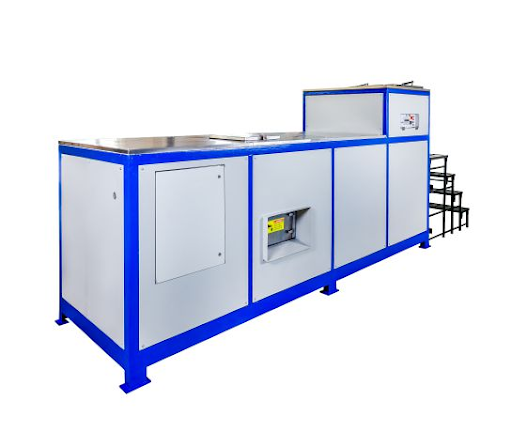
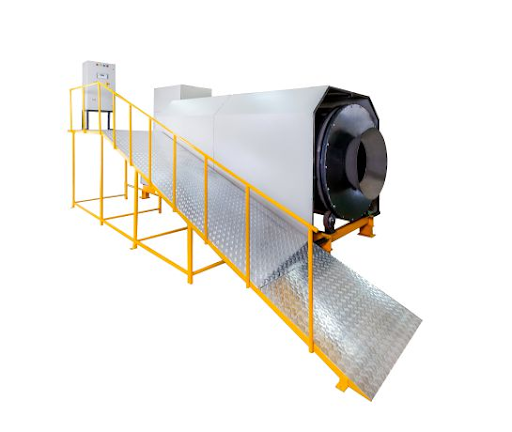
- Product range: For example, they have the Smart Xpress Composting Machine (100 kg/day capacity) which is automatic and processes organic biodegradable waste at source; they have larger machines (250 kg/day, 1000 kg/day etc.) and different types (semi-automatic, drum, conveyor drum composters).
- Compliance with regulatory needs:
- Speed: Smartenviro’s Smart Xpress 100 makes compost in ~3-4 days after proper curing. That aligns with what many policies expect of machines (reasonable processing time).
- Automation / ease of operation: Minimises manual intervention, an advantage for housing complexes or institutions without technical staff.
- Capacity variety: Because policies often hinge on scale (bulk waste generators, etc.), having machines from small (100 kg/day) to large (1000 kg/day etc.) allows customers to choose what fits their requirement.
- Supporting documentation & transparency: Products listed with technical specs, warranty, build material (e.g. stainless steel parts for corrosion), brands for motors/controls. This helps in regulatory compliance and in buyer due diligence.
- Speed: Smartenviro’s Smart Xpress 100 makes compost in ~3-4 days after proper curing. That aligns with what many policies expect of machines (reasonable processing time).
5. Challenges & Gaps in Policy vs Reality
- “Instant composters” with false claims: Some machines claim to produce compost in 24 hours, but in practice output is poor or ends up more like ash. Regulatory documents such as SWM Rules or the On-site composting advisory do not explicitly sanction such claims without adequate proof.
- Lack of standardised testing/certification: There is not yet a widely accepted standard or certifying agency that ensures composting machines meet certain performance metrics (time, odour, output quality).
- Implementation & monitoring weak in many municipalities: Even where rules exist, enforcement is patchy. Bulk waste generators may lack clarity on which kind of machine qualifies; some waste remains mixed; odour, logistics, and maintenance issues affect usability.
- Cost / Infrastructure / Financing: The upfront cost of composting machines can be a barrier; also, electricity, maintenance, staff training, etc.
- Public awareness & trust: Many users are wary after seeing poor performance or high cost; some have had experience of machines gathering dust or failing.
6. What Needs to Happen Next & Industry Predictions
- Standards and Certification Regime: Policymakers (MoEFCC, CPCB, BIS or similar bodies) could establish performance standards for composting/composter machines: e.g. composting time, microbial quality, odour emissions, reduction in volume, pathogens, etc.
- Subsidies / Incentives for compliant machines: To reduce financial burden for adopters, the government could offer subsidies for machines that meet performance criteria; tax benefits / accelerated depreciation, etc.
- Mandatory compliance & better enforcement: Bulk generators must be held to account; municipal authorities need to issue clearer guidelines (for example, define accepted machines) and monitor usage.
- Technological innovation: Machine manufacturers will continue to innovate: better odour control, energy efficiency, space optimisation, faster throughput, integration with IoT etc. Smartenviro already shows movement in automation and scalable capacities.
- Market growth & scale: With urbanisation, increasing per capita waste, plastic or packaging bans etc., the market for composter machines and composting machines will grow. Smartenviro and similar firms are well-positioned to benefit.
7. Buyer & Stakeholder Advice: Choosing the Right Composter Machine
If you are a hotel, housing society, hospital, or any bulk waste generator considering buying a composting machine or composter machine, here are practical tips:
- Calculate your organic waste stream: How many kg/day? What is the peak demand? Don’t over- or under-invest.
- Check composting time & output quality: How many days from input to usable compost? Is there odour control? What is the expected nutrient content or microbial safety?
- Automation vs manual: Is the machine fully automatic (mixing, shredding, curing) or semi-manual? For institutions with less technical staff, more automation helps.
- Energy and power needs: Look at HP rating, power consumption, electrical components; ensure compatibility with local power supply and costs.
- Material quality & build: Corrosion-resistant parts (stainless steel), durable motors/gears, reliable control systems.
- Service & maintenance support: Warranty, spare parts, after-sales service, training; the best machine can perform poorly if poorly maintained.
- Certifications/proof: Ask for case studies, performance data, and third-party verification if available.
- Cost & Return on Investment (ROI): Factor savings (waste transport, landfill levies or fines), possible revenue from compost, environmental / CSR benefits.
Smartenviro Systems Private Ltd’s offerings align well with many of these.
8. Conclusion
India’s policy & regulatory framework, from the SWM Rules to advisory guidelines on decentralised composting, as well as municipal mandates, is pushing the composting machine industry toward higher standards, more reliable products, greater accountability, and wider adoption. For manufacturers and buyers, this is both a challenge and an opportunity. Smartenviro Systems Private Ltd is one of the companies stepping up, with diverse product capacities, automation, and design that reflect regulatory realities; they are well-positioned. As standards and enforcement tighten, those who deliver real composting machines, not just overhyped “instant converters”,- will lead the way.
If you’re considering a composting machine, now is the time to assess your waste needs, choose quality, demand transparency, and work with manufacturers like Smartenviro that match what the policy environment is demanding.