

Ever wondered what happens to the banana peel you toss in the bin or the leftover curry from dinner? Here’s a startling fact: India generates over 78 million tonnes of household food waste annually. And that’s just the tip of the iceberg when you consider wet organic waste from kitchens. Enter the era of the smart home composter machine—making it possible to turn that waste into rich compost, right at your doorstep.
In this article aimed at Indian homeowners, apartment societies and housing-complex residents you’ll learn how a composter machine, specifically designed for food‐waste and home or society use, can revolutionise your waste management. We’ll also look at how Smartenviro Systems Private Ltd is offering advanced composting machine solutions and what you should look for when choosing one. Ready to dive? Let’s go.
1. Why home waste needs a smarter solution
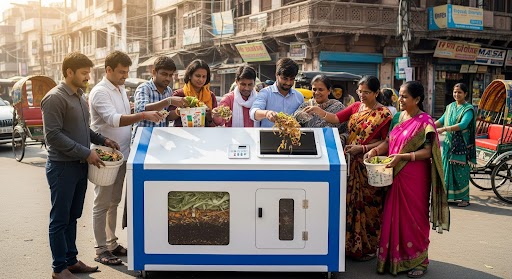
Kitchens generate a lot of wet waste: vegetable peels, fruit skins, leftover food, coffee grounds. Traditional disposal means bin → garbage truck → landfill (or worse, open dumping). But those waste streams are not only lost resources, but they also emit methane, contribute to landfill overload and raise costs for societies and municipalities.
In fact, about 61% of India’s food waste occurs at the household level. With growing urbanisation and multi-storey apartment living in cities like Pune, Mumbai, Bengaluru, the logistics of transporting, segregating and processing kitchen waste become more complex. A home-scale solution is emerging as a must-have, not just a nice-to-have. (Transition Research)
2. Trend #1: Rising food-waste volumes in India
As noted earlier, India discards roughly 78 million tonnes of household food waste each year. According to the United Nations Environment Programme Food Waste Index Report, a significant share of global food waste comes from households and food-service sectors.
What this means: the need to process and manage food waste at or near its source is more urgent than ever. And this is where home-friendly and society-friendly solutions like a food waste composter machine come in.
3. Trend #2: Decentralised waste management – the shift from landfill to source
Municipal systems are under pressure: growing waste volumes, high transportation costs, limited landfill space, methane emissions, and regulatory scrutiny. According to 2021-22 reports, although much of the waste is collected, only a fraction is scientifically processed.
Decentralised solutions, treating organic waste at the source (in homes, apartments, offices), are gaining traction. This makes it viable for societies and households to install a composter machine or composting machine onsite, rather than relying purely on external trucks and facilities.
This also aligns with sustainability goals and cost savings.
4. Trend #3: Smart home-friendly machines – from kitchen to compost bin
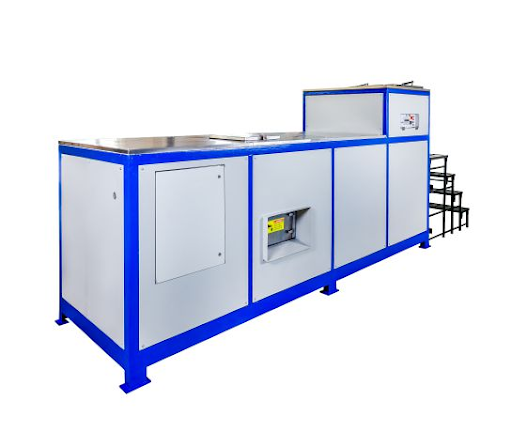
Gone are the days when composting meant a backyard pile, a bucket of worms, or manual turning. Today’s machines can:
- Process food waste, vegetable and fruit scraps, coffee grounds, even small bones or cooked food.
- Reduce volume by 70-80 % or more.
- Be relatively compact, odour-sealed, automatic or semi-automatic, suitable for societies or large homes.
- Deliver usable compost in a few days (instead of weeks or months).
- Offer built-in shredding, curing, aeration systems, all rolled into the “composter machine” or “composting machine” categories.
More Indian homes are now installing a food waste composter machine or looking at society-level units. And companies like Smartenviro are leading that space.
5. How a composter machine works – what to look for
If you’re considering a machine—whether named “composter machine”, “composting machine”, or “food waste composter machine”—here’s what matters:
- Capacity: How much waste can it handle daily (kg/day)? Find one suited to your household or society size.
- Mechanism: Does it shred, aerate, cure, ventilate? These features matter for speed and odour control.
- Cycle time: Some machines convert waste into compost in 3-4 days.
- Footprint & installation: Space constraints in Indian apartments matter.
- Odour control & hygiene: Especially important in homes and societies.
- End product quality: The compost should be stable, safe, usable for gardening or landscaping.
- Energy usage, maintenance, cost: All factors to compare.
When you read about a “composting machine” or “composter machine”, ensure you’re comparing apples to apples.
6. Spotlight on Smartenviro Systems Private Ltd and their composting machine solutions
Founded and located in Pune, Smartenviro Systems Private Ltd is a leading manufacturer in India of decentralised organic waste processing solutions. Their product range, from what their website clearly shows, covers a wide spectrum of capacities, from ~50 kg/day up to several tons.
Some highlights:
- They list a “100 kg/day food waste composting machine” as one of their core items.
- Their model “SMART Xpress Composting Machine” handles 1250 kg/day in certain configurations.
- Their machines are described as “fully automatic”, “deodorised”, and “minimal manual intervention”.
- On their website they emphasise that food-waste is treated at source, helping prevent transport and landfill.
By choosing Smartenviro’s composter machine or composting machine, an apartment complex or homeowner in India can directly tap into a proven supplier—locally based, with Indian servicing capability, and relevant to the Indian context (space, infrastructure, cost).
Indirectly, by installing a Smartenviro machine, you become part of a broader circular-economy shift: waste becomes resource.
7. Benefits for Indian households – environment, cost, ease
Installing a food waste composter machine at home or in your society offers multiple benefits:
- Reduced waste pickup cost & segregation burden: Less volume means fewer trucks, less hassle.
- Lower carbon footprint: Organic waste in landfills releases methane; processing on-site cuts that risk.
- Generate your own compost: The output from a composting machine becomes fertiliser for gardens, plants, even home-raised vegetables.
- Cleaner, healthier living space: Odour control, fewer pests, less waste stacking.
- Align with regulations & sustainability goals: With rules tightening, societies that manage organic waste proactively get ahead.
- Brand value & community upgrade: For apartment societies in India, having a modern composter machine positions them as progressive and environment-friendly.
In short: you reduce your waste burden and gain a composting solution that pays back in environmental terms.
8. Choosing the right composter machine for your home or society
Here are actionable tips:
- Estimate your daily organic-kitchen waste: For a 50-flat society, maybe 20–40 kg/day; for a large building or restaurant more.
- Match capacity: If small batch, a 100 kg/day model (like from Smartenviro) could suffice; for larger societies you may look at 250 kg/day or higher.
- Consider space & location: Does the machine need ventilation? Are there noise/odour constraints?
- Check service & maintenance support: Since Smartenviro is based in Maharashtra and active in India, service will generally be easier.
- Look at cost vs value: A composter machine will cost more upfront than a simple bin—but savings accrue via lower disposal costs, less volume, and compost output.
- End-product usability: Ensure the machine you pick converts waste into usable compost within days; check claims (some machines from Smartenviro claim 3-4 days).
- Opt for recognised manufacturer: Smartenviro has several client references and capacity ranges listed.
By applying these tips you can ensure your chosen solution is “fit for India” and “fit for your household/society”.
9. Future outlook – what’s next in composting machine tech and home-waste ecosystems
Several trends worth noting:
- Smart sensors & IoT integration: Future composting machines will monitor moisture, temperature, cycle time, maybe connect to apps for status.
- Greater volume reduction: Machines are increasingly efficient, converting up to ~80% volume reduction in mechanical-aerobic systems.
- Hybrid systems: Combining aerobic composting with anaerobic digestion or biogas where feasible.
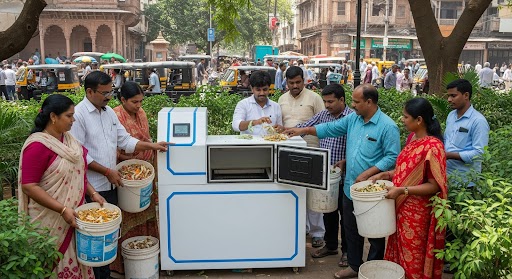
- Decentralised neighbourhood clusters: Instead of one big processing plant, many societies will adopt localized composter machine setups—reducing transport and emissions.
- Policy incentives: Indian governments (state and city) are already pushing for onsite organic waste processing. So installing a composter machine aligns with upcoming regulation.
- Circular economy linkages: The compost output can feed urban gardens, rooftop farming, landscaping around apartments, closing the loop from waste to resource.
For forward-thinking Indian homeowners and societies, adopting a high-quality composter machine now puts you ahead of the curve.
10. Conclusion
With India facing a massive food-waste challenge and more households and societies looking for viable solutions, the time is ripe to act. A composter machine or composting machine is not a luxury, it’s a practical step towards smarter waste management. And when you choose a trusted partner like Smartenviro Systems Private Ltd, you benefit from proven design, Indian servicing, relevant capacities and a forward-looking company.
If you’re a homeowner, society manager or facilities-in-charge reading this, ask yourself: what will I do with my kitchen’s wet waste next year? Will I keep sending it to the landfill or start converting it into soil-loving compost right here? The machine in your basement or common room can make that decision simple.
Let’s turn that leftover idli, that potato peel, into green gold with the right “food waste composter machine”. Because better waste management for your home means a better environment for all.