

What if the waste your home, office, or community produces could be turned into rich soil — without stinking piles or endless manual effort? In a country like India, where a large share of municipal solid waste (MSW) is organic, investing in an industrial composting machine can transform waste into a valuable resource. In this post, we’ll dive into how machines like a waste composting machine or organic waste converter work, their features and capacities, and why they’re ideal for Indian conditions. If you’re curious about sustainable waste management or looking for solid waste management machinery for your facility, read on. We’ll also show how a trusted name in this field, Smartenviro Systems Private Ltd, is helping businesses and institutions unlock the benefits of composting.

Why Composting Machines Matter in India
- In many Indian cities, over 50% of municipal solid waste is biodegradable — kitchen scraps, garden waste, food waste.
- Traditional waste disposal often means dumping this organic waste in landfills, which leads to methane emissions, foul odours, pests, and wasted opportunity. Composting, instead, turns this waste into compost that enriches soil, reduces landfill burden, and supports a circular economy.
- According to national solid waste data, India generates tens of millions of tonnes of waste annually, but only a fraction is processed properly.
- That’s where a good waste composting machine or organic waste converter becomes crucial, to treat waste at source, reduce disposal woes, and produce useful compost.
So for apartment complexes, hotels, institutions, or municipal bodies, investing in solid waste management machinery isn’t just about cleanliness. It’s about sustainability, cost savings, and contributing to a healthier environment.
1. What Is an Industrial Composting Machine and How Does It Work?
An industrial composting machine (also known as a waste composting machine or organic waste converter) is a mechanised system that processes organic waste, kitchen scraps, food leftovers, garden waste, and biodegradable municipal waste under controlled aerobic conditions. Unlike traditional composting (which can take weeks or months), these machines accelerate decomposition by controlling temperature, moisture, and aeration, often using rotating drums or automated in-vessel systems.
The process breaks down organic matter into stable compost a nutrient-rich soil amendment within days to a few weeks, depending on the machine and waste type. This compost can be reused for landscaping, agriculture, gardens, or municipal landscaping needs. By converting waste into compost, these machines help close the loop in waste management: from waste generation → treatment, → resource recovery.
2. Key Features & Capacity: What to Look For
When evaluating a composting machine (organic waste converter or solid waste management machinery), especially for Indian conditions (high moisture waste, biodegradable load, varying waste volumes), consider the following:
- Capacity (kg/day or ton/day): Choose according to the volume of waste you generate. For example, a small hostel or cafeteria might need 50–250 kg/day; a large residential complex, hotel, or institution may need 500 kg/day or more.
- Type of waste handled: Food waste, kitchen scraps, garden waste, biodegradable MSW. The machine should accept mixed organic waste without much pre-processing.
- Technology and automation: Fully automatic in-vessel or drum composters, which control aeration, temperature and sometimes shredding, result in faster, odour-free composting. Semi-automatic machines may need some manual loading or intervention.
- Build quality and materials: Stainless steel or durable metal for longevity; robust motors or aeration systems if waste moisture is high, as is often the case in India.
- Speed to compost, output quality: Efficient machines produce stable compost in days/weeks and ensure high-quality compost that meets compost-use norms.
3. Benefits of Using Composting Machines
Environmental Benefits
- Reduces landfill burden: Instead of sending organic waste to landfills (or worse, open dumping), compost machines divert waste for beneficial use. This reduces pressure on landfills and cuts down on leachate and pollution. (Ministry of Housing and Urban Affairs)
- Reduces greenhouse gases: Controlled aerobic composting produces far fewer methane emissions than anaerobic decomposition in landfills. (MDPI)
- Supports circular economy & sustainable agriculture: Compost returns nutrients to the soil, reducing dependence on chemical fertilisers, improving soil health, and promoting sustainable farming or landscaping.
Operational & Economic Benefits
- Cost savings on waste disposal: Institutions, housing societies, and hotels, which otherwise pay for garbage collection or disposal, can reduce costs by processing waste on-site.
- Resource recovery: Instead of paying for waste disposal, you get compost that can be used internally (gardens, landscaping) or sold or distributed — effectively turning waste into value.
- Compliance & waste management regulations: For larger establishments or municipalities, using solid waste management machinery helps meet regulatory norms and avoid fines.
Practical Benefits
- Convenience & hygiene: Machines automate composting, reducing manual labour, odour, pests, and hygiene problems associated with wet waste.
- Scalable: From small-scale units for cafeterias to large industrial composters for institutional use, there are options matching different needs.
- Predictability: Controlled transformation ensures reliable, uniform output compost — unlike traditional compost heaps which are unpredictable.
4. Spotlight on Smartenviro Systems Private Ltd — Solutions & Product Range
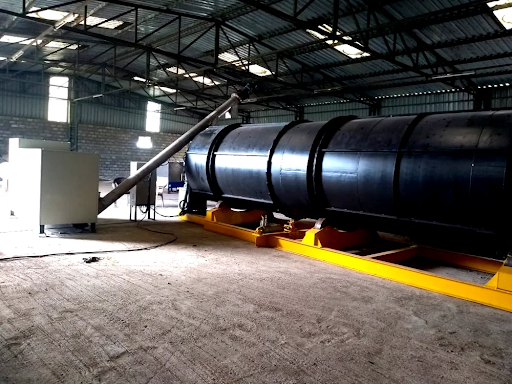
If you’re looking for an experienced player in India, especially close to Pune, consider Smartenviro Systems Private Ltd. Here’s why they stand out:
- Smartenviro designs and manufactures a wide range of organic waste converters and waste composting machine solutions from small-scale food waste composters to large, industrial-grade composting machinery.
- Their offerings include small capacity units (e.g., 100 kg/day, 250 kg/day) and larger composters designed for institutions or large-scale waste producers.
- The machines are built for Indian waste contexts capable of handling organic kitchen waste, food scraps, and biodegradable material.
- Their product line includes several variants of batch composters, drum composters, and “Smart Xpress” composting machines, batch composters giving flexibility depending on waste volume, space, and budget.
- Because they are based in Pune (address: Gat No. 400/401, Urawade, Mulshi, Pune), they are well-placed for clients across Maharashtra and India.
By choosing Smartenviro, you get Indian-engineered composting solutions that understand local waste profiles, climate, and the need for scalable, reliable waste composting machines.
5. Choosing the Right Composting Machine for Your Needs
Here’s a rough guide depending on typical use cases in India:
Use Case
Small-scale kitchen/cafeteria/hostel / small office
Mid-size residential complex/school / medium office
Large office campus/hotel/hospital/mall
Municipality/community composting hub/housing society cluster
Suggested Machine / Capacity
100–250 kg/day composter (compact organic waste converter)
250–500 kg/day batch or drum composter
500 kg/day or more, industrial-grade composter
High-capacity drum composter or multiple units from 500 kg/day upward
Why It Works
Handles daily food waste without huge space or investment
Offers higher throughput, suits daily mixed organic waste
Meets high volume waste generation reliably
Enables decentralised waste composting, reduces landfill burden and waste hauling
When you evaluate a waste composting machine or organic waste converter, consider not just capacity, but also footprint (space required), power consumption, maintenance needs, and throughput time. Also, source segregation of waste (separating organic from inert or dry waste) significantly improves efficiency and compost quality.

6. Practical Considerations for Indian Users: Maintenance, Segregation, Compliance & ROI
- Segregate at Source: For composting machines to work efficiently, ensure organic waste is separated from plastics, metals, glass, etc. Mixing inert or non-biodegradable waste can hamper composting and damage the machine.
- Regular Maintenance: Periodic cleaning, checking aeration or drum rotation, moisture control, especially during monsoon or in humid climates, ensures consistent production and avoids odour or pests.
- Volume Consistency: Composters work best when operated regularly. If waste input is irregular, batch-type composters may be more suited than continuous feed models.
- Compliance & Permits: For larger installations or community hubs — check local municipal regulations around waste processing, compost standards (for sale), waste-treatment norms, especially if you plan to supply compost externally.
- Cost vs Benefit: While the upfront cost of a composting machine may seem high, long-term savings on waste disposal, plus value from compost (for gardens, landscaping, or sale), along with environmental benefits, make it a worthwhile investment.
7. Conclusion & Call to Action
India’s growing urbanisation and rising waste generation make sustainable waste management solutions more important than ever. A well-chosen industrial composting machine, whether a compact organic waste converter for a small facility or a heavy-duty waste composting machine for larger institutions, can transform the challenge of waste into an opportunity: clean surroundings, cost savings, and nutrient-rich compost.
If you are seeking reliable, India-ready composting solutions, Smartenviro Systems Private Ltd offer a robust range of machines designed for exactly this, from small-scale food waste composters to industrial-grade solid waste management machinery.
Take the next step: Evaluate your waste generation, segregate organic waste at source, and consider investing in a composting machine today. Reach out to Smartenviro to get a quote and transform your waste management approach for a cleaner, greener tomorrow.