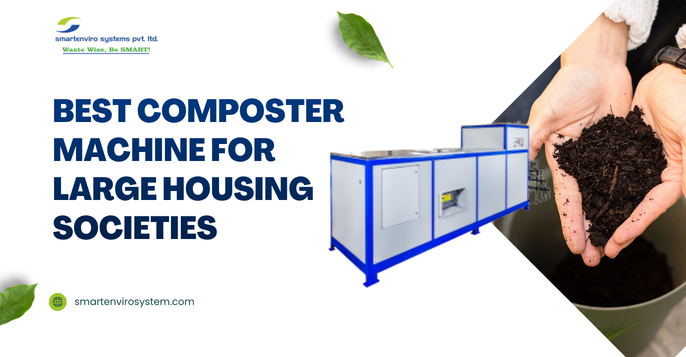
Did you know that a single large housing society in India can generate over 500–1000 kg of wet waste every day?
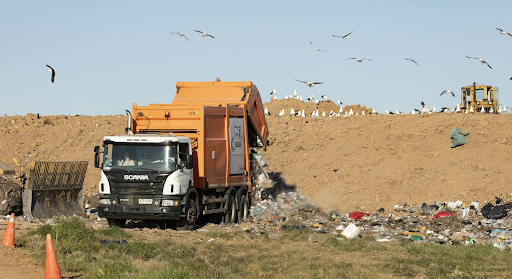
Now imagine this: instead of that waste piling up in landfills, it could be converted into nutrient-rich compost, right inside your society.
That’s exactly where a composter machine becomes a game-changer.
The Growing Waste Problem in Indian Housing Societies
Urban India is expanding fast, and so is its waste.
According to the Central Pollution Control Board (CPCB), India generates over 150,000 tonnes of municipal solid waste daily, and nearly 50–60% of it is organic waste.
For large housing societies, this means:
- Overflowing garbage bins
- High disposal costs
- Unhygienic surroundings
- Increased complaints from residents
And with stricter municipal rules (like mandatory waste segregation in cities like Pune, Mumbai, and Bangalore), societies are now under pressure to manage waste at source.
This is where an organic waste converter becomes not just useful, but essential.
What is a Composter Machine?
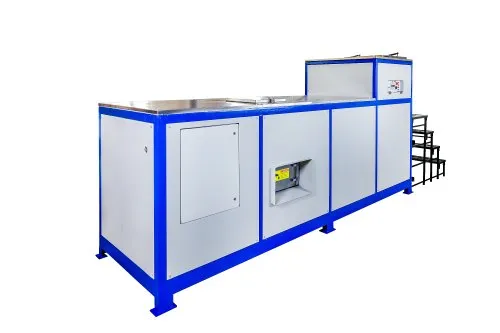
A composter machine is a system designed to convert organic waste like food scraps, vegetable peels, and garden waste into compost.
More advanced versions, like a food waste composter machine, accelerate this process using:
- Controlled temperature
- Microbial cultures
- Mechanical mixing
In simple terms, instead of waiting months for compost, you get results in 24–72 hours.
Why Large Housing Societies Need a Composter Machine
Let’s be practical.
Managing waste manually in a society of 100+ flats is inefficient and messy.
Here’s why installing an organic waste composter machine makes sense:
1. Reduces Waste Disposal Costs
No more daily transportation charges for wet waste.
2. Cleaner Premises
No foul smell, no pests, no overflow.
3. Compliance with Government Rules
Most Indian municipalities now encourage or mandate on-site composting.
4. Creates Value
The compost produced can be used for gardens or even sold.
5. Boosts Society Reputation
Eco-conscious living is a major selling point today.
Types of Composting Machines for Housing Societies
1. Fully Automatic Organic Waste Converter
- Ideal for large societies (200+ flats)
- Minimal manual intervention
- Fast processing
2. Semi-Automatic Food Waste Composter Machine
- Requires some manual handling
- Lower cost
- Suitable for mid-sized societies
3. In-Vessel Composting Systems
- Closed systems
- Odor-controlled
- Compact design
For large housing societies, an organic waste converter with automation is usually the best choice.
5 Key Features to Look for Before Buying
Choosing the right food waste composter machine is critical. Here’s what you should evaluate:
1. Processing Capacity
Match machine capacity with daily waste generation (e.g., 100 kg, 300 kg, 500 kg).
2. Processing Time
Look for machines that convert waste within 24–48 hours.
3. Odour Control System
Essential for residential areas.
4. Energy Efficiency
Electric consumption matters for long-term costs.
5. Ease of Operation
Society staff should be able to operate it easily.
Why Smartenviro Systems Private Ltd Stands Out
When it comes to reliable waste management solutions, Smartenviro Systems Private Ltd has emerged as a trusted name in India.
Their solutions are designed specifically for Indian conditions—high humidity, mixed waste, and large-scale usage.
What Makes Them Different?
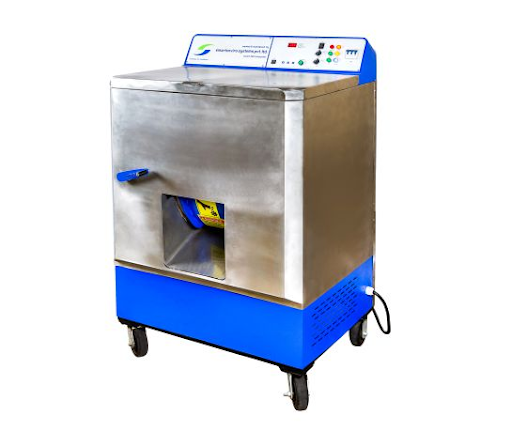
Advanced organic waste composter machine technology
Custom solutions based on society size
Strong after-sales support
Energy-efficient systems
Compliance with pollution control norms
Unlike generic machines, Smartenviro focuses on end-to-end solutions—from installation to training and maintenance.
How Smartenviro’s Organic Waste Converter Works
Their organic waste converter is engineered for efficiency and simplicity.
Step-by-Step Process:
- Waste Collection – Segregated wet waste is added
- Shredding & Mixing – Ensures uniform processing
- Decomposition – Microbial action breaks down waste
- Drying & Curing – Converts into usable compost
The result?
High-quality compost with minimal effort.
Real Benefits for Housing Societies
Let’s move from features to real-world impact.
1. Space Saving
Modern machines are compact and designed for urban environments.
2. No Smell, No Mess
Odor control systems ensure a clean environment.
3. Faster ROI
Savings on waste disposal quickly offset machine cost.
4. Eco-Friendly Living
Reduces landfill dependency and carbon footprint.
5. Community Engagement
Residents feel proud of sustainable practices.
Common Mistakes to Avoid
Before installing a food waste composter machine, watch out for these:
- Ignoring proper waste segregation
- Choosing an incorrect capacity
- Lack of staff training
- No maintenance plan
Working with experienced providers like Smartenviro Systems Private Ltd helps avoid these pitfalls.
Cost vs Long-Term Savings
Many societies hesitate due to initial investment.
But let’s break it down:
Costs Include:
- Machine purchase
- Installation
- Electricity
Savings Include:
- Reduced garbage collection costs
- Lower penalties
- Free compost for landscaping
In most cases, societies recover costs within 1–2 years.
Future of Waste Management in India
The shift is already happening.
- Smart cities are promoting composting
- RWAs are adopting sustainability practices
- Government policies are getting stricter
Soon, having a composter machine won’t be optional; it will be standard.
Final Thoughts
A composter machine is no longer a luxury for large housing societies—it’s a necessity.
With rising waste volumes, stricter regulations, and growing environmental awareness, adopting an organic waste composter machine is one of the smartest decisions a society can make today.
And when it comes to choosing the right solution, companies like Smartenviro Systems Private Ltd are helping societies across India make this transition smoothly, efficiently, and sustainably.