
Did you know that India generates over 62 million tonnes of municipal solid waste every year, but only a fraction of it is scientifically processed? According to the Ministry of Housing and Urban Affairs, improper waste disposal remains one of the biggest environmental challenges facing Indian cities today.
Now imagine this: every day, your household throws away kitchen scraps, plastic packaging, paper, glass bottles, and other waste into a single dustbin. Once mixed, much of this waste becomes difficult to recycle, compost, or process efficiently. The result? Overflowing landfills, pollution, and wasted resources.
The good news is that solving this problem starts right at home. By understanding What is waste segregation?, learning the 4 types of waste segregation, and knowing how to separate dry and wet garbage, every household can make a meaningful impact on the environment.
In this blog, we’ll explore 8 simple and practical ways to practise waste segregation at home, understand its benefits, and see how innovative solutions from Smartenviro Systems Private Ltd. are helping communities and organizations manage waste more sustainably.
What is Waste Segregation?
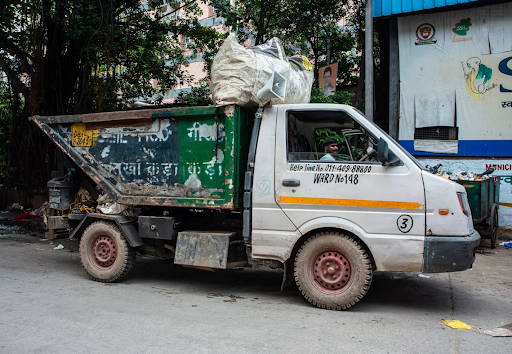
Let’s start with the most important question: What is waste segregation?
Waste segregation is the process of separating waste into categories based on its type and disposal method. Instead of mixing all waste into one bin, waste is sorted at the source so it can be recycled, composted, treated, or disposed of appropriately.
Understanding what waste segregation is is essential because mixed waste often ends up in landfills, while segregated waste can be reused or processed efficiently.
In simple terms, what is waste segregation? means putting the right waste in the right bin.
The concept may seem small, but it creates a huge positive impact on cleanliness, sustainability, and environmental protection.
Why Waste Segregation Matters More Than Ever
India’s growing population and urbanization have dramatically increased waste generation.
According to the Central Pollution Control Board (CPCB), Indian cities generate thousands of tonnes of waste daily, much of which reaches landfills without proper treatment.
Waste segregation helps:
- Reduce landfill burden
- Improve recycling rates
- Support composting initiatives
- Lower environmental pollution
- Improve public health
- Enable efficient waste collection
As environmentalist Jane Goodall famously said:
“What you do makes a difference, and you have to decide what kind of difference you want to make.”
One of the simplest differences we can make begins with segregating waste at home.
Understanding the 4 Types of Waste Segregation
To practise effective waste management, homeowners must understand the 4 types of waste segregation commonly followed across India
1. Wet Waste
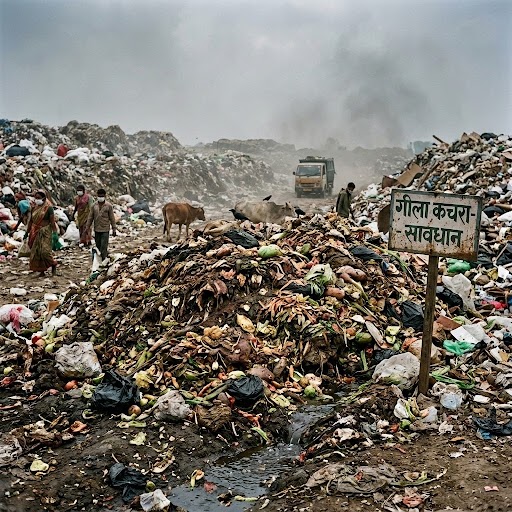
Wet waste includes:
- Food leftovers
- Fruit peels
- Vegetable scraps
- Tea leaves
- Garden waste
This waste can be composted and converted into nutrient-rich manure.
2. Dry Waste
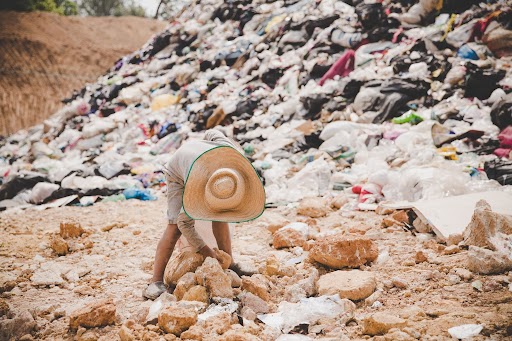
Dry waste includes:
- Paper
- Plastic
- Cardboard
- Metal
- Glass
Most dry waste can be recycled when properly segregated.
3. Domestic Hazardous Waste
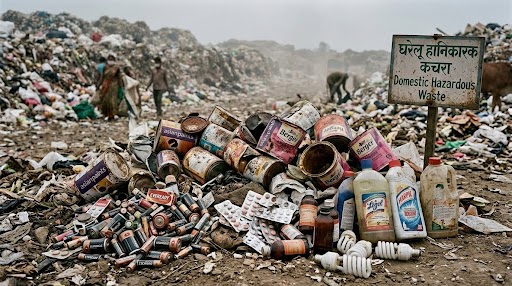
This category includes:
- Batteries
- Paint containers
- Expired medicines
- Chemical cleaners
- CFL bulbs
These materials require special disposal methods.
4. Sanitary and Biomedical Waste
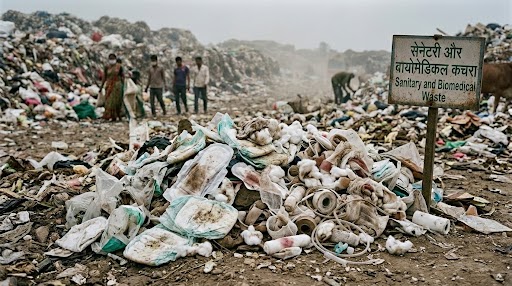
Examples include:
- Diapers
- Sanitary napkins
- Medical dressings
- Bandages
Such waste must be disposed of separately to prevent contamination.
Understanding these 4 types of waste segregation helps households manage waste responsibly.
The better people understand the 4 types of waste segregation, the easier it becomes to contribute to cleaner cities and healthier communities.
Today, municipalities across India actively encourage citizens to adopt these 4 types of waste segregation at the source.
How to Separate Dry and Wet Garbage Correctly
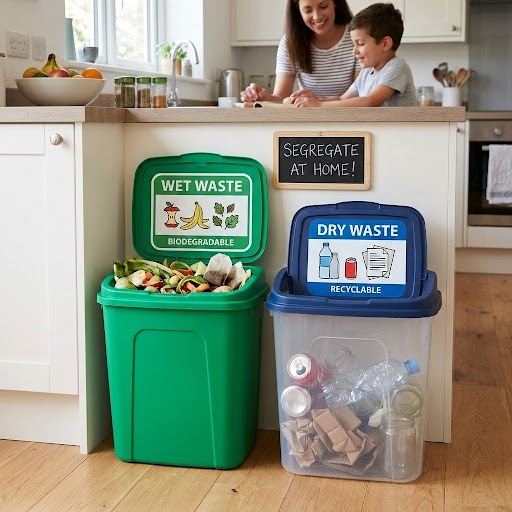
One of the most common questions homeowners ask is how to separate dry and wet garbage effectively.
The process is simpler than many people think.
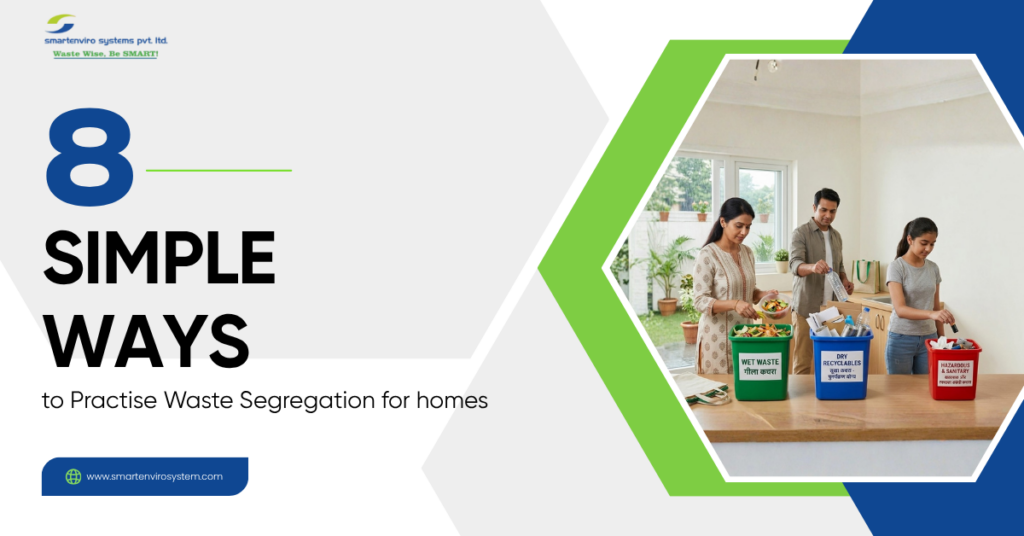
For Wet Garbage
Use a green bin for:
- Leftover food
- Vegetable peels
- Fruit waste
- Coffee grounds
- Garden trimmings
For Dry Garbage
Use a blue bin for:
- Plastic packaging
- Newspapers
- Cardboard
- Metal cans
- Glass bottles
Understanding how to separate dry and wet garbage ensures that recyclable materials remain clean and usable.
Many people unknowingly contaminate recyclable waste by mixing it with food scraps. Learning how to separate dry and wet garbage prevents this problem and improves recycling efficiency.
In fact, how to separate dry and wet garbage should be one of the first environmental habits taught to children at home.
8 Simple Ways to Practise Waste Segregation at Home
1. Keep Separate Bins from Day One
The easiest way to begin is by placing separate bins for wet and dry waste in your kitchen.
Color-coded bins make segregation easy for all family members.
2.Educate Everyone in the Household
Waste segregation works only when everyone participates.
Teach children, elderly family members, and domestic staff about the different waste categories.
3. Label Your Bins Clearly
Simple labels help prevent confusion.
Examples:
- Wet Waste
- Dry Waste
- Hazardous Waste
- Sanitary Waste
Labels improve consistency and reduce mistakes.
4. Compost Kitchen Waste
A large portion of household waste comes from kitchens.
Composting converts wet waste into useful fertilizer for plants and gardens.
This significantly reduces waste sent to landfills.
5. Clean Recyclables Before Disposal
Food-contaminated plastic and paper often cannot be recycled.
Rinse bottles, containers, and cans before placing them in dry waste bins.
6. Store Hazardous Waste Separately
Items such as batteries and expired medicines should never be mixed with regular household waste.
Designate a separate container for hazardous materials.
7. Reduce Single-Use Plastics
Waste segregation becomes easier when less waste is generated in the first place.
Choose:
- Cloth bags
- Reusable bottles
- Steel containers
- Eco-friendly packaging
8. Follow Local Municipal Guidelines
Different cities may have specific waste collection rules.
Stay informed about local waste segregation requirements and collection schedules.
Following municipal guidelines ensures that your efforts contribute to larger waste management initiatives.
Common Mistakes to Avoid
Even households that practise segregation sometimes make errors.
Avoid these common mistakes:
Mixing Food Waste with Recyclables
This contaminates recyclable materials.
Ignoring Hazardous Waste
Hazardous waste requires special handling and disposal.
Using Only One Bin
Multiple bins are essential for proper segregation.
Not Educating Family Members
One person’s mistake can contaminate an entire waste stream.
Consistency is key to successful waste management.
How Smartenviro Systems Supports Sustainable Waste Management
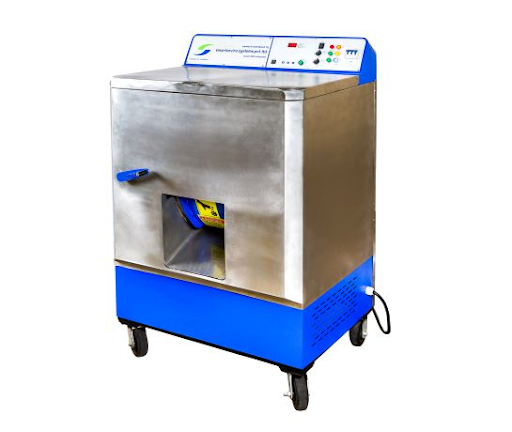
As India moves toward smarter and more sustainable waste management practices, technology-driven solutions are becoming increasingly important.
Smartenviro Systems Private Ltd. is contributing to this transformation through innovative waste management and environmental solutions designed for municipalities, residential communities, institutions, industries, and urban infrastructure projects.
The company focuses on helping organizations improve waste collection efficiency, monitoring, sustainability, and environmental compliance through advanced technology and integrated systems.
By supporting scientific waste management practices, Smartenviro Systems helps create cleaner environments, smarter cities, and more sustainable communities.
Their solutions align with the growing need for effective waste segregation, resource recovery, and environmentally responsible waste processing.
As awareness around sustainable living increases, organizations like Smartenviro Systems play an important role in enabling long-term environmental improvements across India.
Future Trends in Waste Management
The future of waste management is becoming smarter, data-driven, and more sustainable.
Emerging trends include:
- Smart waste bins
- IoT-based waste monitoring
- Automated waste sorting
- AI-powered recycling systems
- Community composting initiatives
- Circular economy models
- Waste-to-energy technologies
Governments, businesses, and citizens will increasingly work together to improve waste segregation and resource recovery.
Conclusion
Every household generates waste, but every household also has the power to manage it responsibly. By understanding what waste segregation is, adopting the 4 types of waste segregation, and learning how to separate dry and wet garbage, families can contribute significantly to cleaner surroundings and a healthier environment.
Small changes in daily habits can create lasting environmental benefits, reduce landfill waste, improve recycling outcomes, and support India’s journey toward a more sustainable future.