
What if the biggest climate solution in your building’s garbage room isn’t solar power, EV charging, or some futuristic green innovation—but yesterday’s leftover biryani?
Sounds dramatic. But it’s true.
Globally, 1.05 billion tonnes of food were wasted in 2022, representing 19% of food available to consumers, according to UNEP’s Food Waste Index Report 2024.
Now think about India.
Hotels, corporate cafeterias, restaurants, housing societies, temples, hospitals, and institutions generate mountains of wet waste every single day. Most of it gets transported, dumped, and forgotten, until it returns as odour, methane emissions, pests, overflowing landfills, and rising waste bills.
That’s where composting changes the story.
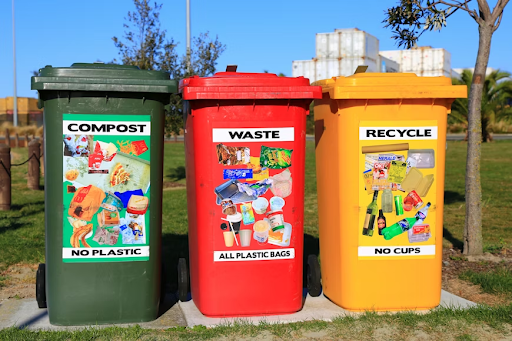
This blog explores why composting is becoming one of the smartest sustainability moves in India, how a food waste composter machine works, what businesses should look for in a composter machine, and why organisations are increasingly choosing decentralised waste solutions from specialists like Smartenviro Systems Private Ltd.
Why Food Waste Has Become India’s Silent Environmental Crisis
Food waste is not just a cleanliness issue.
It’s an environmental, operational, and financial problem.
When food waste reaches landfills:
- it decomposes anaerobically
- releases methane
- attracts rodents and insects
- creates public hygiene concerns
- increases transport and collection costs
For Indian businesses, the problem is magnified because wet waste often forms the largest share of daily waste generation.
Common contributors include:
- restaurants
- food courts
- IT campuses
- banquet halls
- educational institutions
- hospitals
- residential communities
The irony?
Waste that could become a useful resource is treated like a disposal burden.
What Composting Really Does (And Why It Matters More Than Ever)
Composting is nature’s recycling system.
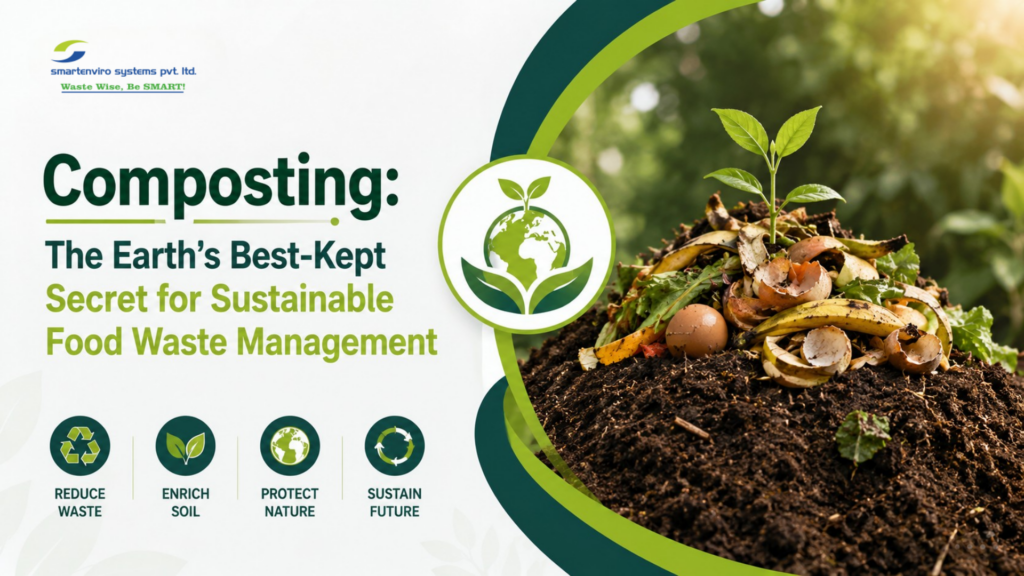
Instead of sending food scraps to rot in landfills, composting converts biodegradable waste into nutrient-rich compost.
That compost can support:
- landscaping
- gardens
- urban farming
- soil improvement
- green campus initiatives
But modern composting isn’t about old backyard pits anymore.
Today’s systems use engineered processes that make composting faster, cleaner, and scalable.
That’s why the food waste composter machine category is gaining momentum across India.
The Science Behind a Food Waste Composter Machine
A food waste composter machine accelerates natural decomposition under controlled conditions.
The typical process includes:
1. Waste Input
Food waste enters the machine.
Examples:
- leftovers
- fruit peels
- vegetable scraps
- cooked food waste
- canteen waste
2. Size Reduction
Some systems include shredding for faster breakdown.
Smaller particles decompose more efficiently.
3. Controlled Aeration
Oxygen is introduced.
This promotes aerobic decomposition rather than foul anaerobic rotting.
4. Moisture Management
Wet waste has high moisture.
Machines regulate conditions for stable composting.
5. Heat Generation
Microbial activity creates heat, speeding decomposition.
6. Compost Output
Usable compost is generated significantly faster than traditional methods.
This is why a modern composter machine is far more practical for commercial settings than manual compost pits.
7 Business Benefits of Composting Food Waste
1. Lower Waste Disposal Costs
Transporting wet waste costs money.
On-site composting reduces dependence on external collection.
A food waste composter machine helps control recurring operational expenses.
2. Cleaner Premises
Wet waste left unmanaged creates:
- odour
- insects
- hygiene complaints
A reliable composter machine improves housekeeping standards.
3. Better ESG Positioning
Sustainability is no longer optional.
Investors, customers, and regulators increasingly notice waste practices.
4. Reduced Landfill Dependency
Decentralised composting keeps waste closer to source.
This reduces municipal burden.
5. Resource Recovery
Waste becomes compost.
That’s circular economy thinking in action.
6. Operational Efficiency
Manual segregation and disposal create friction.
Technology simplifies the workflow.
7. Brand Reputation
Responsible waste management strengthens public trust.
Especially for:
- hospitality brands
- campuses
- institutions
- healthcare groups
Why On-Site Composting Is Becoming a Major Trend in India
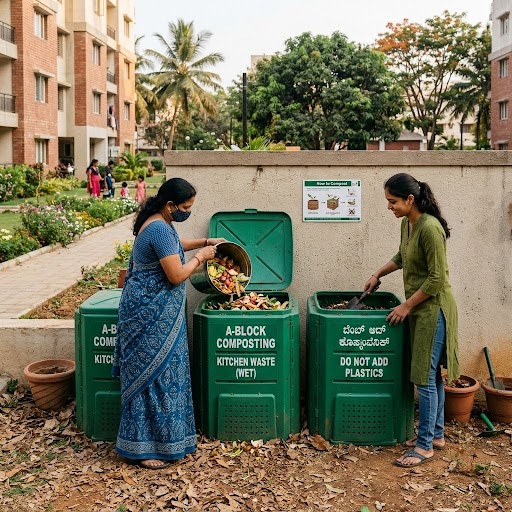
A major sustainability shift is happening.
Businesses are moving from “collect and dump” to “process at source.”
Why?
Because centralised disposal creates multiple inefficiencies:
- logistics dependency
- transport cost
- collection delays
- odour risks
- landfill impact
On-site composting solves these pain points.
That’s why the composter machine market is evolving rapidly.
Indian organisations increasingly want:
- compact systems
- low-maintenance solutions
- odour-controlled composting
- scalable capacity
- compliance-friendly infrastructure
How to Choose the Right Composter Machine
Not all systems are equal.
Before buying a composter machine, ask:
Capacity
How much waste do you generate daily?
Examples:
- 50 kg/day
- 100 kg/day
- 250 kg/day
- 500 kg/day
- 1 ton+
Waste Type Compatibility
Can it process:
- cooked food?
- vegetable waste?
- mixed canteen waste?
- bulk hospitality waste?
Ease of Operation
Can non-technical staff use it?
Space Requirements
Is the machine suitable for urban properties?
Odour Management
Critical for public-facing businesses.
Service Support
Downtime can disrupt operations.
Vendor support matters.
Scalability
Can your solution grow with future waste volumes?
Smart Technology and the Future of Organic Waste Management
Composting technology has evolved.
Advanced systems may now include:
- mechanical mixing
- shredding integration
- aeration systems
- moisture control
- modular scalability
This is where experienced waste management companies stand out.
One such specialist in India is Smartenviro Systems Private Ltd.
According to the company, Smartenviro focuses on decentralised organic waste management solutions with multiple composting technologies and installation experience across sectors. (UNEP – UN Environment Programme)
Their offerings include:
- SMART Xpress Composter
- SMART Drum Composter
- SMART Batch Composter
- covered aerated static pile systems
These solutions are relevant for businesses needing structured organic waste treatment rather than generic disposal.
Why Smartenviro Systems Private Ltd Is Helping Businesses Rethink Waste
Choosing a machine is one thing.
Choosing the right waste management partner is another.
Businesses often fail because they buy equipment without evaluating:
- site constraints
- waste profile
- operational workflow
- support requirements
- long-term scalability
That’s where consultative providers make a difference.
Smartenviro Systems Private Ltd positions itself not just as an equipment supplier, but as a decentralised waste solutions partner.
For Indian organisations, that distinction matters.
Because the best food waste composter machine is not always the biggest or cheapest.
It’s the one correctly matched to operational reality.
As environmental thinker William McDonough said:
“Waste equals food.”
That’s exactly the philosophy modern composting embraces.
Practical Composting Checklist for Indian Businesses
Before investing in a food waste composter machine, review this:
✔ Daily waste quantity
✔ Peak waste generation
✔ Waste type mix
✔ Available installation space
✔ Staff operating capability
✔ Maintenance expectations
✔ Service network availability
✔ Odour control needs
✔ Compost reuse opportunities
✔ Budget vs long-term ROI
Common Mistakes Buyers Make
Avoid these expensive errors:
Buying the Cheapest Option
Low upfront cost often means higher maintenance.
Ignoring Waste Type
Not every machine handles mixed food waste equally.
No Service Due Diligence
A stalled machine becomes a waste storage problem.
Wrong Capacity Planning
Underestimating waste volume creates bottlenecks.
Treating Composting as a Box-Ticking Exercise
Real success needs process alignment.
Final Thoughts
Food waste is not disappearing because it leaves your building.
It simply becomes someone else’s environmental problem.
Composting changes that equation.
A modern food waste composter machine gives Indian businesses a smarter way to reduce waste, control costs, improve hygiene, and align with sustainability goals.
And with specialised solution providers like Smartenviro Systems Private Ltd supporting decentralised waste infrastructure, composting is no longer an idealistic concept.
It’s operationally practical.