
Every morning, thousands of temples across India witness the same sacred ritual: flowers offered with devotion, prasad prepared in bulk, banana leaves discarded, and wet waste quietly piling up behind the premises.
But here’s the uncomfortable question: Should sacred spaces contribute to environmental pollution?
India generates massive volumes of municipal solid waste every day, with biodegradable waste forming a significant portion of it, according to government waste management assessments. Improper disposal of temple waste often leads to foul odours, pests, clogged drains, and methane emissions from landfills. (Smartenvirosystems)
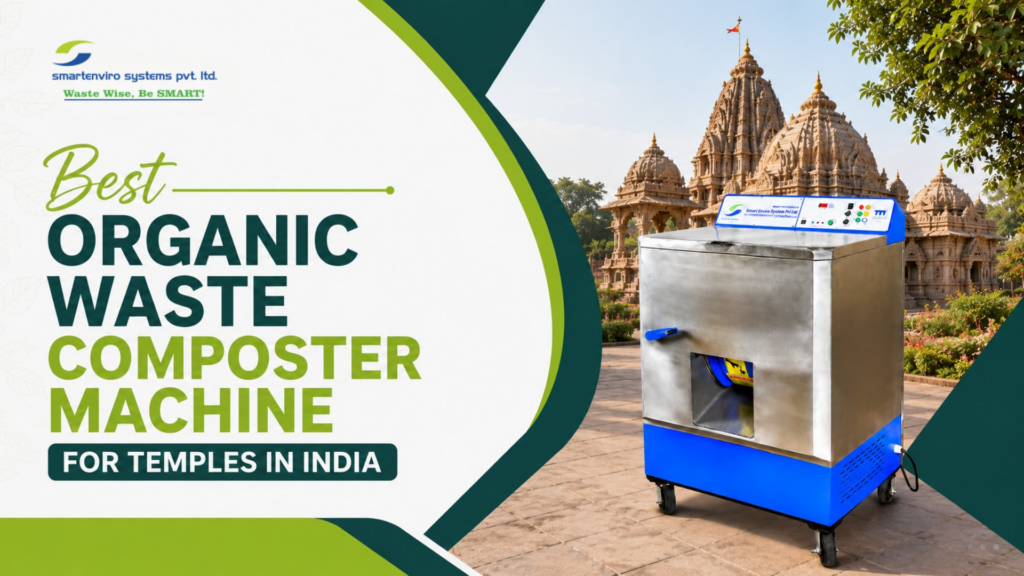
This is exactly why many temple administrations are now exploring the right organic waste composter machine solution—not just for cleanliness, but for responsible environmental stewardship.
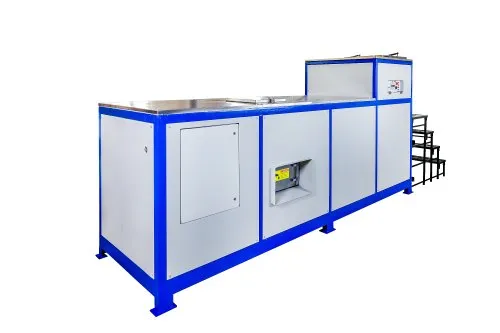
In this guide, we’ll explore what makes the best composter machine for Indian temples, what trends are shaping waste management in religious institutions, and how modern Indian engineering is making sustainable waste disposal practical.
Why Temple Waste Management Has Become a National Priority
Temples are among the highest generators of concentrated organic waste in India.
Typical waste streams include:
- Flower garlands
- Coconut shells
- Fruit waste
- Prasad leftovers
- Banana leaves
- Food waste from annadanam kitchens
- Garden waste from temple landscapes
Unlike regular commercial establishments, temple waste generation can fluctuate dramatically during:
- Festivals
- Ekadashi gatherings
- Annual yatras
- Special poojas
- Weekends and auspicious dates
That unpredictability makes manual disposal inefficient.
As Mahatma Gandhi famously said:
“The earth provides enough to satisfy every man’s needs, but not every man’s greed.”
For temples, sustainability is no longer optional, it aligns naturally with spiritual responsibility.
The Growing Challenge of Organic Waste in Indian Temples
Temple authorities often face practical issues:
1. Overflowing Wet Waste
Without proper treatment, biodegradable waste decomposes rapidly.
Result?
- bad odour
- insect infestation
- hygiene complaints
- public dissatisfaction
2. Rising Disposal Costs
Municipal pickup costs and labour dependency keep increasing.
3. Space Constraints
Urban temples in cities like Pune, Mumbai, Chennai, Bengaluru, and Hyderabad often lack disposal space.
4. Compliance Pressure
Waste segregation and on-site management expectations are becoming stricter for institutions.
This is where an organic waste composter machine becomes operationally valuable.
What Makes an Ideal Organic Waste Composter Machine for Temples?
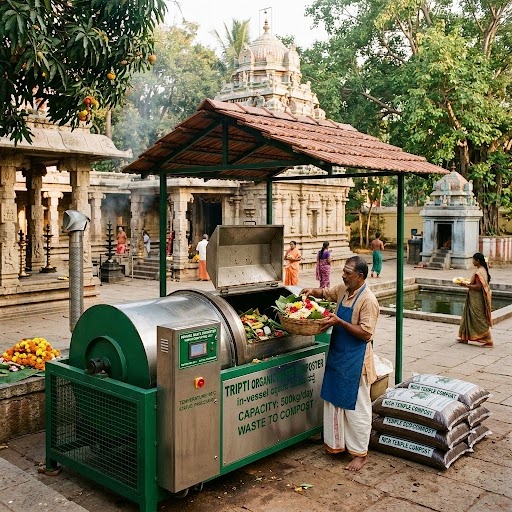
Not every machine suits temple operations.
Temple waste is unique because it combines:
- high moisture content
- fibrous flower waste
- seasonal volume spikes
- mixed organic textures
The ideal composter machine must handle this complexity.
Key requirements:
Fast Processing
Temple waste cannot sit for days.
A suitable organic waste composter machine should reduce decomposition timelines significantly.
Odour Control
Temples are public spaces.
Bad smell is unacceptable.
Easy Operation
Temple staff are rarely trained machine operators.
Simple controls matter.
Scalable Capacity
A small neighbourhood mandir and a major pilgrimage temple need different capacities.
Low Maintenance
Frequent breakdowns defeat the purpose.
7 Features Temples Should Look For in a Composter Machine
1. Multi-Waste Compatibility
Your machine should process:
- flower waste
- food scraps
- fruits
- leaves
- kitchen organic waste
2. Compact Design
Especially critical for city temples.
A bulky system creates operational friction.
3. Fast Composting Cycles
Speed improves sanitation.
A quality organic waste composter machine should shorten treatment cycles efficiently.
4. Mechanical Efficiency
Machines with integrated shredding and mixing improve consistency.
5. After-Sales Support
This is often ignored.
Machine purchase is only step one.
Reliable service support matters more.
6. Compliance-Friendly Engineering
Temple trusts increasingly prefer systems aligned with sustainable waste handling norms.
7. Custom Capacity Options
Needs vary widely:
- 50 kg/day
- 100 kg/day
- 250 kg/day
- 500 kg/day
- large institutional capacities
Why Decentralised Composting Is Trending in India
One major shift in Indian waste management is decentralisation.
Instead of transporting waste to distant dumping grounds, organisations now process waste at source.
Why?
Because transporting wet waste means:
- extra logistics cost
- leakage risks
- foul smell
- labour dependency
- environmental burden
This shift has made the composter machine category increasingly relevant.
For temples, decentralised composting means:
- cleaner premises
- lower disposal cost
- useful compost generation
- reduced municipal dependency
Smart Technology in Temple Waste Management
Modern composting is no longer a primitive pit in the backyard.
Advanced systems now offer:
- controlled aeration
- shredding integration
- thermophilic composting support
- automated mixing
- moisture management
Indian institutions increasingly want cleaner, faster, scalable solutions.
That’s where experienced solution providers stand apart.
How Smartenviro Supports Sustainable Temple Waste Management
When evaluating waste management partners, institutional experience matters.
Smartenviro Systems Private Ltd has positioned itself as a specialist in decentralised organic waste treatment solutions in India.
According to company information, they have:
- 10+ years of experience
- 900+ clients served
- capability across waste treatment scales
- multiple composting technologies
- consultation and operational support services
This matters for temples because religious institutions rarely need one-size-fits-all machinery.
A temple handling 80 kg/day differs completely from one generating 1 ton daily during festivals.
Smartenviro’s solution ecosystem includes:
- SMART Xpress Composter
- SMART Drum Composter
- SMART Batch Composter
- Covered Aerated Static Pile solutions (Smartenvirosystems)
Their consultative approach is especially relevant because temple waste handling requires site assessment, capacity planning, and workflow design—not just equipment installation. (Smartenvirosystems)
Indirectly, this reflects a larger truth:
The best machine is not merely the one with features. It’s the one matched correctly to your waste reality.
Cost vs Long-Term Value: What Temple Trusts Should Consider
Many buyers ask:
“What is the cheapest composter machine?”
Wrong question.
Better question:
“What gives the best operational value over 5 years?”
Evaluate:
Initial Investment
Machine cost
Operating Cost
Electricity, consumables, manpower
Service Reliability
Downtime can become expensive
Waste Reduction Efficiency
How effectively does the organic waste composter machine reduce volume?
Compost Output
Can the compost be reused for temple gardens or landscaping?
Brand Trust
Institutional buyers need dependable vendors.
Common Buying Mistakes Temple Authorities Make
Avoid these:
Choosing Capacity Based Only on Average Waste
Festival peaks matter.
Ignoring Service Availability
Machines fail. Support matters.
Buying Based on Lowest Price
Cheap becomes expensive.
No Site Assessment
Layout impacts usability.
Underestimating Waste Type Complexity
Flower waste behaves differently from food waste.
A Practical Buying Checklist
Before purchasing a composter machine, ask:
✔ What is our daily waste volume?
✔ What is our peak festival waste volume?
✔ Do we need shredding?
✔ How much space is available?
✔ What is the composting cycle time?
✔ Is odour control built in?
✔ What service support exists in our city?
✔ Can staff operate it easily?
✔ Is the machine suitable for temple waste specifically?
Final Thoughts
Temples are centres of faith, discipline, and community responsibility.
Waste management should reflect the same values.
A well-chosen organic waste composter machine does more than process waste.
It protects hygiene.
It reduces operational burden.
It supports sustainability.
It aligns sacred spaces with modern environmental responsibility.
For temple administrations seeking proven decentralised composting expertise, evaluating established Indian specialists like Smartenviro Systems Private Ltd can be a practical starting point.
Because devotion should leave blessings, not waste.