
Have you ever paused to think what happens to your kitchen scraps, those vegetable peels, fruit waste, tea leaves, after you throw them in the bin? In India, a huge proportion of household and institutional waste is organic. When that organic waste ends up in landfills or open dumps, it decomposes without oxygen and produces methane, a greenhouse gas that’s about 25 times more potent than carbon dioxide over 100 years. If we could use composting machines and composter machines properly, we’d not just manage waste better, we’d take a major step toward slowing climate change. In this post, you’ll learn how composting machines work, see examples of products (especially from Smartenviro Systems Private Ltd), and understand how you or your organization can adopt these solutions to reduce emissions and benefit the environment.
1. The Organic Waste – Greenhouse Gas Connection
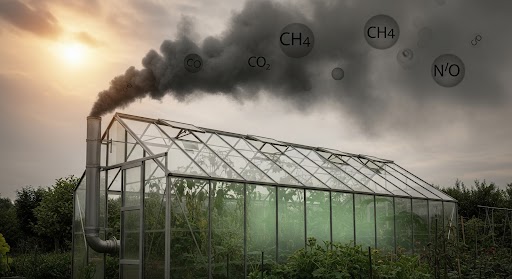
Organic waste (food scraps, garden waste, agricultural residues) typically forms 30-40% of total municipal solid waste in many Indian cities. When placed in landfills, this waste decomposes anaerobically (without oxygen), producing methane (CH₄), a powerful greenhouse gas. For example, in certain analyses, one ton of food waste sent to a landfill produces far more emissions than if composted aerobically. (Enviro Accounts)
In addition, landfills produce leachate, odor, potential contamination of soil and water, and require greenhouse-gas management (which many smaller or informal dumpsites lack). The cumulative impact isn’t just local pollution—it contributes to global warming, respiratory issues for people, and worsening climate vulnerabilities.
2. What a Composting Machine or Composter Machine Does Differently
A composting machine (or composter machine) accelerates the process of organic waste decomposition by facilitating aerobic composting (with oxygen) or controlled processes. Key differences compared to unmanaged landfill disposal:
- Aerobic decay vs anaerobic: Aerobic decomposition generates mostly carbon dioxide (which is less potent per molecule), whereas anaerobic produces methane.
- Control of parameters: Temperature, moisture, shredding, mixing, aeration—all help speed up composting, reduce odours and gas emissions.
- Reduced transport / handling: On-site composter machines mean less waste transported to landfills, lowering transportation related CO₂ emissions.
- Carbon sequestration in soil: Compost improves soil, increasing organic carbon storage. Over time, soils amended with compost store carbon, helping reduce net emissions.
So in effect, composting machines offer a suite of mechanisms that lead to less methane, better soil health, and lower overall greenhouse gas (GHG) emissions.
3. Types of Composting Machines & Their Emissions Impacts
Different systems offer different benefits and trade-offs for emissions:
- Batch Composters: Treat batches of waste; often cheaper; might require manual mixing. If well maintained, they avoid prolonged anaerobic zones, reducing methane.
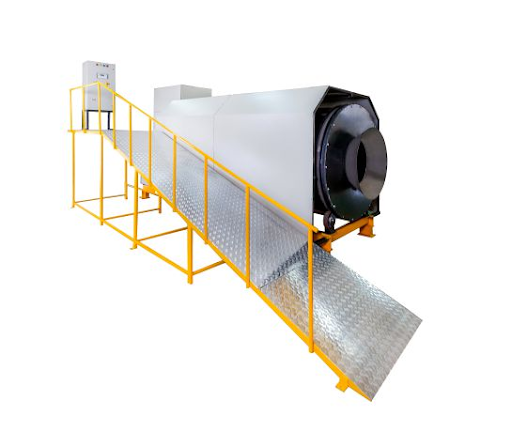
- Drum Composters: Rotating drums ensure constant aeration; better temperature control; faster composting. These often reduce odours and CH₄ emissions significantly compared to static piles.
- Automated Aerated Static Pile / Covered Aerated Static Pile Systems: Very useful at larger scale. Covers prevent escape of volatile organic compounds (VOCs), help with airflow and moisture control. Leachate and odors are managed. These kinds of systems are more capital intensive but offer better emissions mitigation per ton treated.
- Semi-automatic and fully automatic machines: PLC control, shredding, mixing, HMI displays—help ensure optimal composting conditions, further lowering emissions from mis-management.
4. Smartenviro Systems Private Ltd: Products & Real-World Impact
To understand how all this plays out, let’s look at Smartenviro Systems Private Ltd, a Pune-based company that manufactures and supplies composting machines/composter machines across India.
Who they are + scale.
- They offer technology that can treat organic waste from 50 kg/day up to 300 tons/day.(Slideshare)
- They manufacture in-house, with nationwide sales & service, hundreds of installations, and serve diverse client sectors: corporate offices, real estate, hospitality, hospitals, institutions, and government bodies.
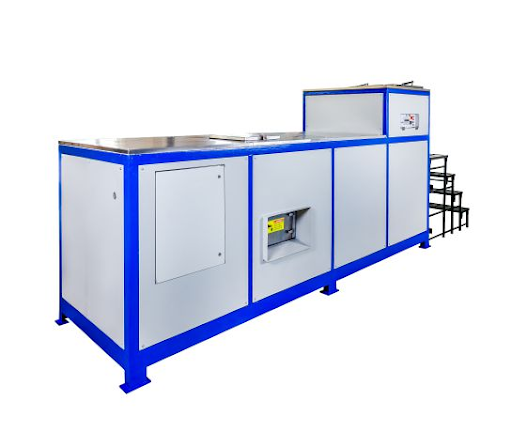
- Their product range includes: SMART Batch Composting Machine, SMART Drum Composter, SMART Xpress Composter, and Covered Aerated Static Pile Composting systems.
Key Products & How They Help Reduce Emissions:
- SMART Xpress Composter: This machine uses aerobic thermophilic composting; includes shredding + curing in a single machine. Heating arrangements help accelerate microbial activity. Faster composting means less time for harmful anaerobic pockets to form, thus less methane.
- SMART Drum Composter: Capacity options like 5 tons/day; internal shredding; good for medium-large scale waste generation. By keeping material turning and aerated, it limits the buildup of gases.
- Covered Aerated Static Pile Composting (up to 300 tons/day): For large-scale operations. The cover and in-floor aeration restrict emissions, prevent odor, manage leachate, and reduce uncontrolled decomposition. (AAJJO)
Additional design features:
- Minimal manual intervention → fewer mistakes, more consistent operation.
- Use of stainless steel for wetted parts (to avoid corrosion), in-built shredding etc. helps ensure that waste is processed well rather than getting stuck in anaerobic zones.
- Covered systems and breathable membranes in static pile design to seal VOCs and reduce odor/gas leakage.
5. Benefits to Indian Users: Why This Matters Here
India has particular challenges and opportunities:
- Rapid urbanization → large volumes of organic waste generated (from homes, markets, hotels).
- Under-developed waste infrastructure in many cities—overloaded landfills, open dumping. GHG emissions from landfill methane are often under-managed.
- Regulatory push: Solid Waste Management Rules 2016 require segregation and processing. Companies & institutions increasingly expected to handle their waste. Smartenviro’s composting machines / composter machines can help satisfy compliance.
- Soil degradation and need for organic agriculture: compost produced is valuable for gardens, farms, green spaces. This closes the loop: waste → compost → soil → less chemical fertilizer.
Financial benefits too: reduced waste transport & tipping fees, revenue or savings from using compost instead of buying fertilizer, lower penalties, improved corporate/environmental image.
6. Challenges & What to Watch Out For
Although composting machines are powerful tools, there are practical considerations:
- Cost & space: Machines (especially large ones) require investment, land/space, possibly infrastructure (power, feedstock handling).
- Operational know-how: To get low emissions, you need proper segregation, moisture control, correct temperatures. Poorly managed composting can still emit methane or have odor issues.
- Energy usage: Some machines need heating, motorized shredders etc. Need to balance emissions from power vs emissions saved. Using renewable or grid-efficient power helps.
- Local conditions: Climate (temperature, humidity), type of organic waste (e.g. lot of wet leachate, seasonal variation) affect performance.
7. 5 Practical Tips to Maximize Greenhouse Gas Emission Reductions with a Composting Machine / Composter Machine
To get the most environmental benefit:
- Segregate waste properly at source: Separate organic (wet) waste from dry recyclables. Cleaner feedstock improves composting, reduces rejects, lowers methane risk.
- Choose the right size & type of composter machine: Don’t oversize (waste too sparse) or undersize (overload). Smartenviro’s range from 50 kg/day to 300 tons/day helps you pick what’s appropriate.
- Ensure good aeration & shredding: Smaller particle size and proper airflow reduce anaerobic zones which produce methane. Machines like the SMART Drum Composter and SMART Xpress that include shredding and aeration are beneficial.
- Monitor moisture & temperature: Composting is a biological process. Aim for right moisture (not too dry, not waterlogged), temperatures appropriate for thermophilic phases, turning or mixing if needed.
- Utilize compost well & sustainably: Apply compost to soil to improve carbon sequestration; avoid shipping compost long distances; use locally generated compost. Also ensure that compost is well cured to avoid residual pollutants.
8. Case / Statistics that Illustrate the Impact
- Studies show that switching organic waste from landfill to composting methods can reduce greenhouse gas emissions substantially (methane avoided, transport emissions cut).(EcoAccount Services)
- For example, Orbin’s analysis suggests that composting one ton of food waste aerobically emits around 550 kg CO₂ equivalent (mostly biogenic CO₂) but avoids much higher methane emissions from landfill. (Orbin Waste Management)
- Smartenviro’s machines processing up to 300 tons/day offer potential to divert massive amounts of organic waste from dumps, which would otherwise produce methane and other harmful gases. Even if only part of the waste is treated this way, the cumulative annual emission savings can be large. (Exact numbers will depend on usage, locality, power source etc.)

9. Conclusion
Composting machines and composter machines aren’t just fancy tools, they are critical pieces of the climate puzzle. By diverting organic waste from landfills, enabling better, faster, aerobic decomposition, and producing useful compost, they help cut methane emissions, reduce carbon footprints, enrich soil, and support cleaner, greener cities. Smartenviro Systems Private Ltd offers a strong product line in this domain, machines scaled from 50 kg/day to 300 tons/day, designs emphasising aeration, minimal manual intervention, and odour/leachate control.
If you are in charge of waste at a business, institution, or even in your society or home, exploring what a composting machine can do for you, including from providers like Smartenviro, is a timely move. Every ton of organic waste properly composted is a step toward cleaner air, healthier soil, and a cooler planet.