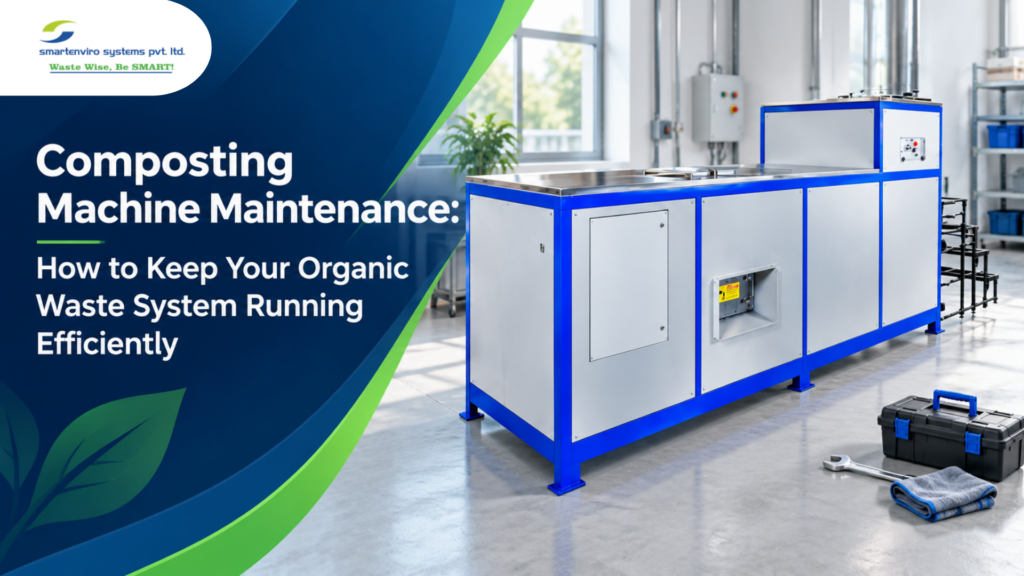

Buying a composting machine is only half the job. The real test begins when the machine has to process organic waste every day, through changing waste volumes, moisture levels and Indian weather conditions. A machine that is poorly maintained can lose efficiency, develop odour issues and eventually create unnecessary downtime.
For housing societies, hotels, hospitals, commercial buildings, institutions and industrial facilities, that is a problem nobody wants. A well-maintained composting machine, on the other hand, can turn segregated organic waste into a useful resource while keeping day-to-day operations more predictable.
In this guide, we will cover the most important maintenance practices for a composter machine, explain what operators should check regularly, discuss common causes of poor performance and look at how the right organic waste converter and professional service support can make a difference.
Why Maintenance Matters for a Composting Machine
An organic waste processing system is not a simple appliance. It combines mechanical components, moving parts, airflow, moisture management and biological processes.
The quality of the input material also matters. Excess moisture, unsuitable waste, poor segregation or inconsistent feeding can affect the process even when the machine itself is functioning correctly.
India’s Solid Waste Management Rules, 2026 include standards for composting facilities and specifically require precautions against issues such as odour, flies, rodents and fire hazards. The rules also address procedures for handling waste when a composting plant is under breakdown or maintenance.
That makes preventive maintenance more than a question of machine life. It is part of responsible waste management.
1. Start With Proper Waste Segregation
The first maintenance step actually happens before waste reaches the machine.
A composter machine is designed to process suitable organic material. Plastic, metal, glass, stones and other unwanted material can interfere with shredders, mixers and other mechanical components.
Poor segregation can therefore result in:
- Blockages
- Excessive wear
- Reduced processing efficiency
- Poor-quality compost
- Increased cleaning requirements
Operators should establish a simple segregation process at the point where waste is generated.
For example, food scraps, vegetable waste and other suitable biodegradable material should be separated from packaging, plastic and other non-organic material before feeding.
A good organic waste converter cannot compensate for consistently poor-quality input material. Waste segregation is the first line of defence.
2. Check the Shredder and Moving Parts Regularly
Many modern composting systems use shredding or mixing mechanisms to reduce waste size and create a more uniform material.
Smart Enviro Systems’ product range includes the Smart Xpress Composter, Smart Drum Composter and Smart Batch Composter. Its product information describes the Smart Xpress as a mechanical composting system with an inbuilt shredder, while the Smart Batch Composter uses shredding and mixing to create a more uniform waste size.
These components need regular inspection.
Operators should look for unusual noise, vibration, reduced throughput or visible wear. Any abnormal behaviour should be investigated instead of allowing the machine to continue operating until a major breakdown occurs.
The exact inspection and servicing frequency should follow the manufacturer’s operating and maintenance instructions.
3. Keep Moisture Under Control
Moisture is one of the easiest things to overlook in organic waste processing.
Kitchen and food waste can contain substantial amounts of water. If the feed becomes excessively wet, the composting process can become harder to manage and may lead to odour or handling problems.
Smart Enviro Systems specifically notes that its Smart Drum Composter may require around 10–20% sawdust depending on the moisture content of the waste.
The lesson is simple: do not treat every batch of organic waste as identical.
Operators should observe the material entering the machine and adjust the process according to its moisture characteristics and the manufacturer’s recommendations.
For larger operations, monitoring input conditions consistently can help avoid recurring performance problems.
4. Clean the Machine and Surrounding Area
A common mistake is to clean only when something starts smelling bad.
Regular cleaning is much easier than dealing with accumulated organic residue, blocked components or hygiene problems later.
The maintenance routine should include cleaning accessible areas of the composting machine, removing accumulated material where recommended and keeping the surrounding floor and work area clean.
This is especially important in hotels, hospitals, food facilities and residential communities where hygiene expectations are high.
The latest Indian composting standards also emphasise measures to minimise nuisance from odour, flies, rodents and other issues around composting facilities.
A clean operating area is therefore not simply about appearance. It supports safer and more controlled operation.
5. Monitor Odour Instead of Ignoring It
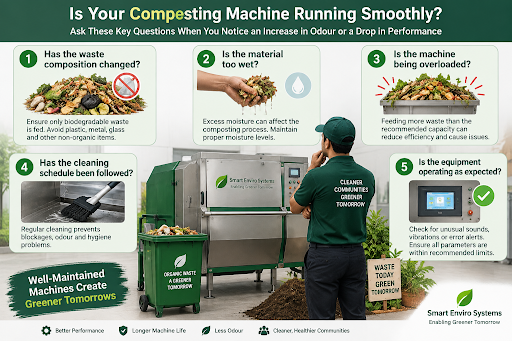
A sudden increase in odour is often a warning sign.
It may indicate unsuitable waste, excessive moisture, poor aeration, incorrect process conditions or a need for cleaning or servicing.
The answer should not simply be to add fragrance or mask the smell.
Instead, operators should ask:
Has the waste composition changed?
Is the material too wet?
Is the machine being overloaded?
Has the cleaning schedule been followed?
Is the equipment operating as expected?
This approach addresses the cause rather than hiding the symptom.
A properly selected and operated organic waste converter should be supported by a process that manages the incoming waste correctly.
6. Don't Ignore Electrical and Mechanical Inspections
Mechanical components are only one part of a composter machine.
Electrical connections, control systems, motors and other components also need appropriate inspection and servicing.
Operators should never attempt electrical repairs without the required technical expertise. Instead, follow the manufacturer’s service schedule and use trained technicians for specialist work.
This is particularly important for larger commercial and industrial installations where unexpected downtime can disrupt daily waste operations.
Smart Enviro Systems’ services include operation and maintenance support for its organic waste composter machines, along with manpower and supervision for integrated waste management requirements.
That kind of support becomes valuable when an organisation does not have an in-house team experienced in maintaining composting equipment.
7. Schedule Preventive Maintenance, Not Just Breakdown Repairs
There are two ways to manage machinery.
The first is to wait until something fails.
The second is to identify potential problems before they become failures.
For an organic waste processing facility, preventive maintenance should include routine inspections, cleaning, component checks, performance monitoring and planned servicing according to the equipment manufacturer’s recommendations.
Smart Enviro Systems says it provides expert teams to survey operations, assess composting requirements and recommend solutions based on those assessments. Its website also highlights operation and maintenance services as part of its broader support offering.
This is important because maintenance should not be treated as an afterthought when selecting an organic waste converter.
Ask about installation, commissioning, operator training, spare parts and after-sales support before purchasing.
Choosing Equipment That Is Easier to Maintain
Maintenance starts with choosing the right system.
Smart Enviro Systems offers multiple composting technologies, including the Smart Xpress Composter, Smart Drum Composter, Smart Batch Composter and Covered Aerated Static Pile Composting.
The company’s website states that it has more than 10 years of experience, over 900 satisfied clients and an installed capacity treating 170 tonnes of organic waste daily.
Its Smart Drum Composter documentation also highlights different configurations depending on capacity, with some models supplied with built-in shredders and larger models using external batch machines and conveyors.
This range matters because the best composting machine is not necessarily the biggest one. It is the one whose capacity, technology, footprint and operating requirements match the waste being generated.
A Simple Maintenance Checklist
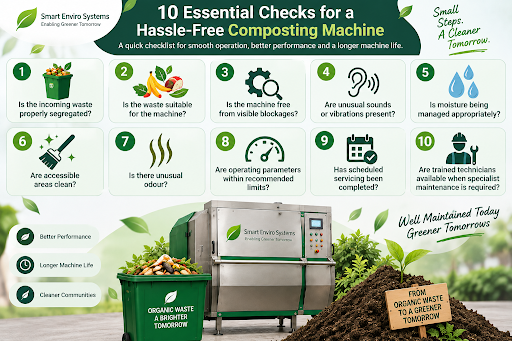
Before starting daily operations, teams can use a basic checklist:
- Is the incoming waste properly segregated?
- Is the waste suitable for the machine?
- Is the machine free from visible blockages?
- Are unusual sounds or vibrations present?
- Is moisture being managed appropriately?
- Are accessible areas clean?
- Is there unusual odour?
- Are operating parameters within recommended limits?
- Has scheduled servicing been completed?
- Are trained technicians available when specialist maintenance is required?
The exact checklist should always be adapted to the machine model and manufacturer’s instructions.
Final Thoughts
A composting machine can provide an efficient way to process organic waste on-site, but its performance depends on more than the equipment itself.
Good segregation, correct feeding, moisture management, regular cleaning, preventive inspections and professional servicing all contribute to reliable operation.
For organisations evaluating an organic waste converter, therefore, the conversation should go beyond capacity and price. Ask what happens after installation. Who trains the operators? Who handles servicing? What happens during downtime? Are spare parts and technical support available?
Smart Enviro Systems combines multiple composting technologies with installation, commissioning and operation and maintenance support.
When the equipment and maintenance approach are planned together, organic waste management becomes less about reacting to breakdowns and more about building a dependable system that can keep working day after day.