
Your facility may generate hundreds of kilograms of wet waste every day, but the real question is not whether you need to manage it. The question is whether you are choosing the right machine to manage it.
For housing societies, hotels, hospitals, IT parks, educational campuses and commercial facilities in India, food and organic waste can quickly become an operational problem. Collection costs, unpleasant odours, storage issues and dependence on external disposal systems can all add to the challenge. This is why more organisations are looking at decentralised waste processing and investing in a composting machine or an organic waste converter.
But buying the first composter machine that appears to match your budget can be an expensive mistake.
The right system depends on your waste quantity, available space, type of organic waste, operational capability and long-term maintenance requirements. In this guide, we will look at seven things you should check before investing in a composting solution for your facility.
1. Check Your Actual Daily Waste Quantity
The most important question is simple: How much organic waste does your facility generate every day?
Do not guess.
Measure your wet waste for at least several days and account for variations. A hotel may generate significantly more food waste during events and peak occupancy periods. A housing society may see seasonal changes. A factory canteen may produce more waste on days with higher workforce attendance.
Choosing an undersized composter machine can create backlogs. Choosing an unnecessarily large machine can increase your initial investment and operating costs.
Smartenviro Systems Private Ltd offers a wide range of composting technologies, with solutions designed for significantly different waste volumes. Its product portfolio includes the Smart Xpress Composter, Smart Batch Composter, Smart Drum Composter and Covered Aerated Static Pile Composting systems.
The company’s product range extends from smaller decentralised applications to large-scale organic waste management. Smartenviro Systems states that its solutions can address waste volumes ranging up to 300 tonnes per day for large-scale applications.
The lesson for buyers is clear: select the machine based on measured waste, not assumptions.
2. Understand What Type of Organic Waste You Generate
Not all organic waste looks the same.
A residential society may primarily generate vegetable peels and leftover food. A hotel may handle large quantities of cooked food, kitchen waste and food preparation waste. A campus may generate a combination of canteen and garden waste.
Before buying an organic waste converter, understand your waste composition.
Ask questions such as:
- How much of the waste is food waste?
- Is waste properly segregated at source?
- Does the waste contain excess moisture?
- Are there contaminants such as plastic or packaging?
- Will garden waste also be processed?
Source segregation is especially important because mixed waste can affect the efficiency of a composting machine and increase operational challenges.
Smartenviro Systems’ product range includes machines with integrated shredding and mixing capabilities for specific applications. For example, its Smart Batch Composter is designed with a shredder and mixer to help prepare waste to a more uniform size.
The machine should fit your waste stream, not force your facility to struggle with a system designed for completely different material.
3. Measure the Space Before Choosing the Machine
A common mistake is choosing a machine based on capacity and discovering later that the facility does not have enough practical space for installation, operation and material movement.
The footprint of a composter machine is only one part of the requirement.
You may also need space for:
- Waste collection and segregation
- Loading the machine
- Bulking agents or additives where required
- Curing
- Compost storage
- Operator movement and maintenance access
Smartenviro Systems provides technical capacity and layout information for different models. Its Smart Drum Composter range, for example, includes multiple capacity options, with site layout requirements varying depending on the actual installation and access conditions.
Before finalising an organic waste converter, conduct a proper site assessment. The best machine on paper is not useful if your team cannot operate and maintain it comfortably.
4. Check How Much Automation You Actually Need
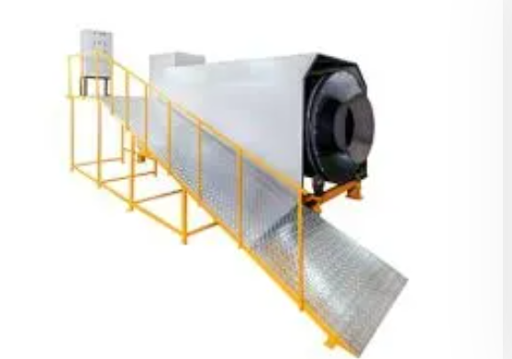
Automation is becoming an important consideration for Indian facilities, particularly where manpower availability and operational consistency are concerns.
A fully automatic composting machine can reduce manual intervention and simplify repetitive processes. However, the right level of automation depends on your facility’s budget, waste quantity and operating model.
Some organisations have dedicated maintenance teams. Others prefer systems that require minimal daily supervision.
Smartenviro Systems offers different technologies rather than a single machine format, allowing facilities to evaluate options such as the Smart Xpress, Smart Batch and Smart Drum Composter based on their operational requirements.
The key question is not, “Which machine has the most features?”
It is, “Which system can our facility operate consistently?”
A sophisticated composter machine that operators find difficult to use may deliver less value than a simpler system that fits into the facility’s daily routine.
5. Look Beyond Capacity and Check the Processing Technology
Two machines may have similar daily capacities but operate differently.
This is why buyers should understand the technology behind the organic waste converter they are considering.
Smartenviro Systems’ portfolio includes mechanical composting systems, drum-based systems, batch composting and Covered Aerated Static Pile Composting. The latter is positioned as an improved approach to conventional windrow composting for larger-scale applications.
The right technology can depend on factors such as:
- Daily waste volume
- Available land
- Processing expectations
- Labour availability
- Odour management requirements
- Budget
- Future expansion
India’s growing focus on decentralised waste management has also increased interest in matching technology with the actual scale of waste generation rather than adopting a one-size-fits-all approach.
When evaluating a composting machine, ask the supplier to explain why a particular technology is suitable for your facility.
6. Check Maintenance and After-Sales Support Before You Buy

A machine is only valuable if it continues to perform.
This is one of the most important points buyers sometimes overlook. Before purchasing a composter machine, ask who will support the system after installation.
Questions to ask include:
- Is operator training provided?
- Is preventive maintenance available?
- Are spare parts easily available?
- Can the supplier provide operational support?
- How quickly can service issues be addressed?
Smartenviro Systems Private Ltd provides operation and maintenance services through its expert team. Its services also include integrated solid waste management support, manpower and supervision, and assistance related to waste management coordination.
For a facility manager, this can make a significant difference. Buying the machine is only the beginning. Reliable operation over several years is where the real value is created.
Smartenviro Systems states that it has served more than 900 clients and has over 10 years of experience in organic waste management.
7. Compare the Complete Cost, Not Just the Machine Price
The cheapest organic waste converter is not always the most economical solution.
When comparing quotations, consider the complete cost of ownership, including:
- Machine price
- Installation
- Electrical requirements
- Site preparation
- Manpower
- Maintenance
- Spare parts
- Consumables
- Training
- Long-term servicing
Also consider the operational benefits of processing waste at the source. On-site treatment can reduce dependence on transporting wet waste elsewhere and can help facilities manage their organic waste more systematically.
According to Smartenviro Systems, its machines collectively have the capacity to treat around 170 tonnes of organic waste per day, demonstrating the scale at which decentralised and industrial composting solutions can be deployed.
A good buying decision should therefore balance the initial investment with long-term reliability, operating requirements and the facility’s actual waste management goals.
Choosing the Right Partner Matters as Much as Choosing the Right Machine
A composting machine is not a plug-and-forget purchase.
Your supplier should understand your waste quantity, site conditions and operational limitations before recommending a solution.
Smartenviro Systems Private Ltd takes this broader approach through its range of composting technologies and support services. From compact mechanical composting systems to Smart Drum and large-scale Covered Aerated Static Pile solutions, the company offers options for different facility sizes and waste volumes.
Its approach is particularly relevant for Indian facilities where waste composition, available space and manpower conditions can vary significantly from one site to another.
Final Thoughts
Buying a composter machine should begin with understanding your waste, not choosing a product brochure.
Check your daily waste quantity. Understand what goes into the waste stream. Measure your available space. Evaluate automation, technology, maintenance and the complete cost of ownership.
A well-selected organic waste converter can help turn an everyday waste problem into a more organised resource management process. But the right choice depends on matching the machine to the facility.
Smartenviro Systems Private Ltd’s broad product range, experience across organic waste management and operation and maintenance support make it a strong option for facilities evaluating a composting machine for long-term use.
The best investment is not simply the biggest or most automated machine. It is the system your facility can operate efficiently, maintain consistently and rely on as its waste management needs grow.