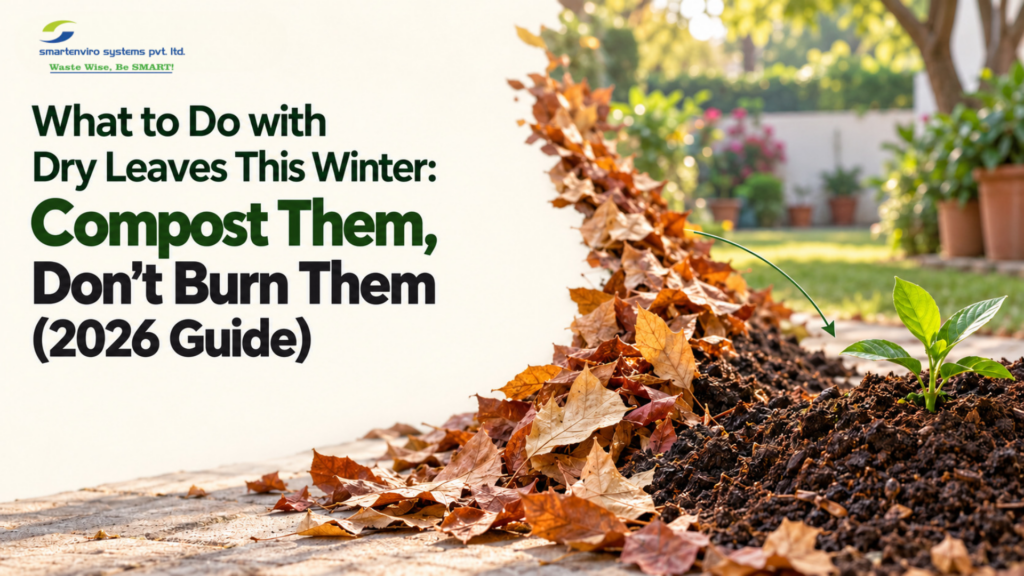

The best thing to do with dry leaves is to compost them, not burn them. Every October and November, housing societies, campuses, hospitals and factories collect heaps of fallen leaves, and many still set them on fire. With GRAP Stage 1 invoked across Delhi-NCR on 21 October 2026, open burning of leaves, biomass and garbage is prohibited. Composting turns the same leaves into a rich soil conditioner for your lawns and gardens, without any smoke.
Dry leaves also solve a common problem in on-site composting. They are rich in carbon and soak up moisture, so they balance wet kitchen waste perfectly. This guide explains why burning is harmful, how to compost leaves the right way, and how a composter machine makes the job faster and cleaner.
Why Is Burning Dry Leaves Harmful?
Burning leaves releases fine particulate matter (PM2.5 and PM10), carbon monoxide and other harmful gases at ground level, right where people walk and breathe. In winter, cold and still air traps this smoke close to the ground, so even small fires in colonies, parks and campuses add to the smog. Burning also wastes a valuable resource, because the organic matter and nutrients in leaves go up in smoke instead of back into the soil.
Under GRAP, open burning of biomass, leaves and municipal waste is prohibited across Delhi-NCR, and authorities step up monitoring as air quality worsens. Many municipal bodies and resident welfare associations across India follow similar rules every winter.
Can You Compost Dry Leaves on Their Own?
You can, but it is slow. Dry leaves are high in carbon and low in nitrogen, so a heap of leaves alone can take many months to break down, especially in cold weather. Composting works best when carbon-rich “browns” such as dry leaves are mixed with nitrogen-rich “greens” such as kitchen and canteen waste. Shredding the leaves first increases their surface area and speeds up decomposition.
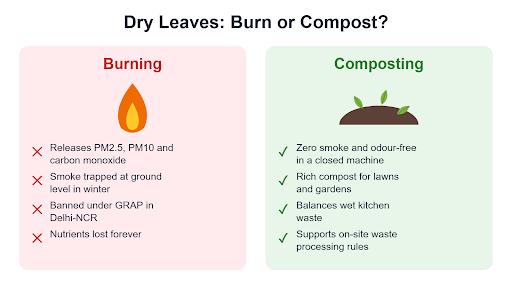
Burning vs composting dry leaves: what each choice leaves behind
How Do You Compost Dry Leaves with Food Waste?
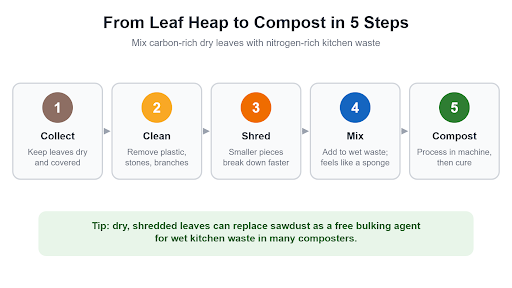
Follow these five steps to turn leaf heaps into compost:
- Collect and keep leaves dry: Store fallen leaves in a covered area or in bags so they don’t get soggy or mixed with plastic.
- Remove contaminants: Pick out plastic, wrappers, stones and thick branches.
- Shred the leaves: Smaller pieces mix better and decompose faster.
- Mix with wet waste: Add shredded leaves to kitchen waste to absorb excess moisture and balance carbon and nitrogen. A good mix feels like a wrung-out sponge.
- Compost and cure: Process the mix in a composter, then let it cure before using it on lawns, gardens and potted plants.
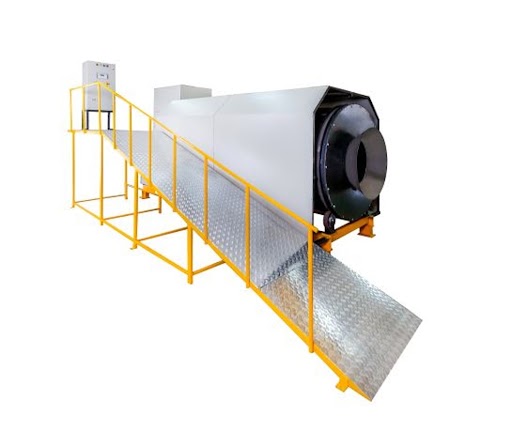
Why Use a Machine Instead of a Leaf Pit?
How Much Leaf Waste Can One Machine Handle?
Leaf fall is seasonal, so plan for the peak. Store dry leaves in a covered corner and feed them in gradually with your daily kitchen waste instead of all at once. Many machines need sawdust as a bulking agent for wet waste, and dry, shredded leaves can often play the same role at no cost. Planned this way, one compost making machine can manage both your year-round food waste and the winter leaf load.
What Are the Benefits for Societies and Campuses?
Installing a composter machine for leaf and food waste brings benefits that go beyond clean air:
- Zero smoke: You stay clear of burning bans and protect residents’ health.
- Lower disposal costs: Less garbage leaves your premises, so you pay less for collection and transport.
- Free compost: Your gardens, lawns and nurseries get a steady supply of organic manure.
- Rule compliance: Under the Solid Waste Management Rules, 2026, bulk waste generators producing 100 kg or more of waste a day must process wet waste on-site wherever feasible.
Frequently Asked Questions
Is it illegal to burn dry leaves?
Open burning of leaves, biomass and garbage is prohibited in Delhi-NCR under GRAP and is restricted by many municipal bodies across India. Check your local rules, but composting is the safer choice almost everywhere.
How long do dry leaves take to compost?
In an open heap, several months. When shredded leaves are mixed with food waste in a machine, the active phase takes 3–4 days in the Smart Xpress and 10–12 days in the drum or batch composter, followed by curing.
Can I compost only leaves in a machine?
It works best with a mix. Leaves alone are too dry and low in nitrogen, so combine them with kitchen or canteen waste for fast, even results. Speak to the team to choose the right waste composting machine for your site.
Conclusion
This winter, treat your leaf heaps as a resource, not a problem. Collect them, shred them, mix them with food waste and let a machine do the rest. You avoid smoke, cut disposal costs and get free compost for your green spaces.