
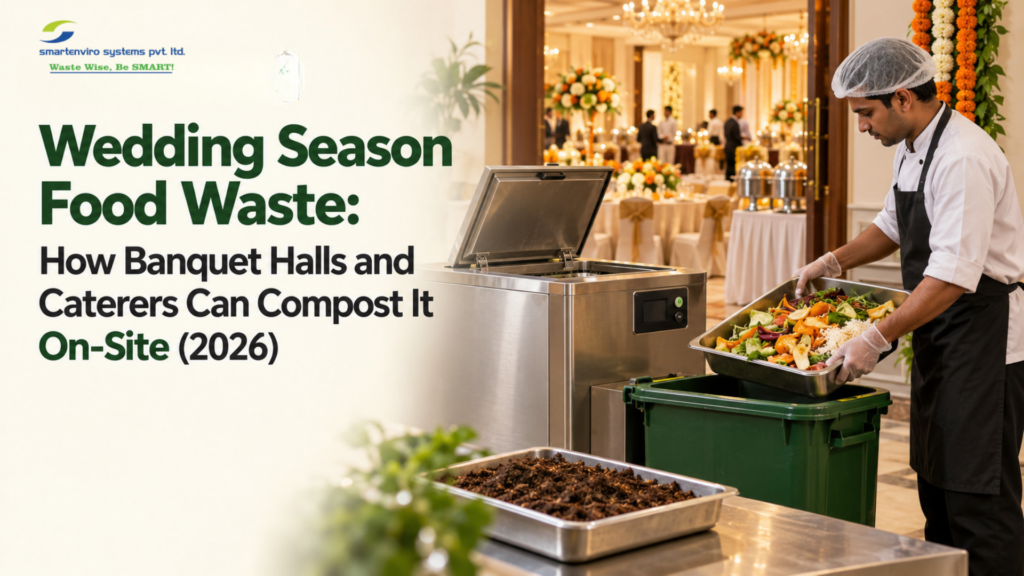

The wedding season from November to mid-December is the busiest time of the year for banquet halls, marriage lawns, hotels and caterers. For the 2025 season, the Confederation of All India Traders (CAIT) estimated around 46 lakh weddings between 1 November and 14 December alone. Every celebration leaves behind kitchen scraps, buffet leftovers, plate waste and flower decorations, often in quantities that overwhelm municipal pickup. The most practical solution is to process this organic waste on-site and turn a daily disposal headache into usable compost.
This guide explains where wedding food waste comes from, what the 2026 rules expect from bulk waste generators, and how to choose the right compost maker machine for your venue.
Where Does Wedding Food Waste Come From?
Most venues deal with five main types of organic waste during the season:
- Kitchen prep waste: Vegetable peels, trimmings and spoiled produce.
- Buffet leftovers: Surplus dishes that can no longer be served safely.
- Plate waste: Food left uneaten by guests.
- Flowers and decor: Marigold garlands, petals, banana leaves and green décor.
- Leaf plates: Natural leaf plates and bowls without plastic coating.
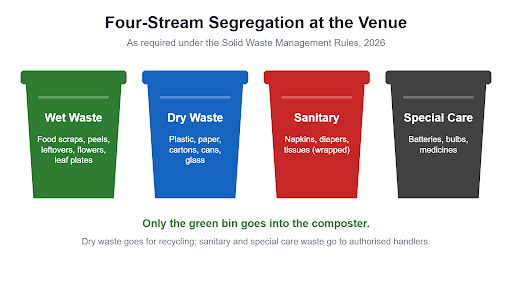
Edible surplus should always go to food banks or local NGOs first. Only what cannot be eaten should be composted. Keeping these streams separate from plastic and foil from the start makes composting faster and the final compost cleaner.
Why Is On-Site Processing Becoming Essential?
Under the Solid Waste Management Rules, 2026, which came into effect on 1 April 2026, any entity that generates 100 kg or more of waste per day is a bulk waste generator. Bulk generators must segregate waste into four streams (wet, dry, sanitary and special care) and treat wet waste within their premises wherever feasible, under Extended Bulk Waste Generator Responsibility. Non-compliance can attract environmental compensation. A busy banquet hall can easily cross 100 kg of waste on a single wedding day.
Beyond compliance, on-site processing means no smelly bins waiting for pickup, lower haulage costs and no rotting waste near guest areas.
How Does On-Site Composting Work at a Venue?
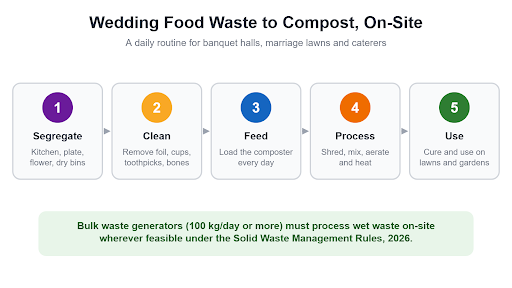
A simple daily routine keeps your composter machine running smoothly through peak season, even on days with back-to-back events:
- Segregate at source: Place separate, labelled bins for kitchen waste, plate waste, flowers and dry waste, and train kitchen and housekeeping staff.
- Remove contaminants: Take out foil, plastic cups, toothpicks, napkins with plastic lining and large bones.
- Feed the machine daily: The machine shreds, mixes, aerates and heats the waste to break it down quickly.
- Balance moisture: Add sawdust or dry leaves when waste is very wet or oily.
- Cure and use: Use the finished compost on lawns, gardens and landscaping around the venue.
Which Machine Suits Your Venue?
Choosing the right Solid waste management machinery depends on your daily waste, available space and budget. Smart Enviro Systems offers three main options:
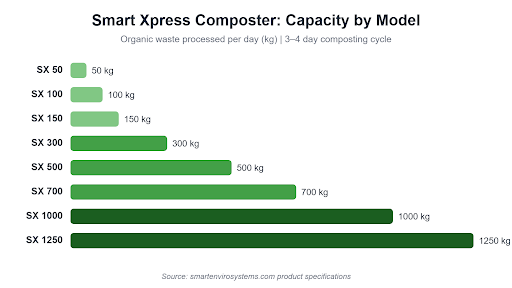
- Smart Xpress Composter: Fully automatic, with a built-in shredder and heaters that hold 60–65°C for a 3–4 day cycle. Models handle 50 to 1,250 kg/day and suit venues with limited space.
- Smart Drum Composter: An odourless, silent in-vessel system with a 10–12 day cycle and models from 100 to 2,500 kg/day. It suits large lawns, hotel groups and central kitchens.
- Smart Batch Composter: A semi-automatic shredder-mixer with a 10–12 day cycle, ideal for smaller caterers who want a lower upfront cost.
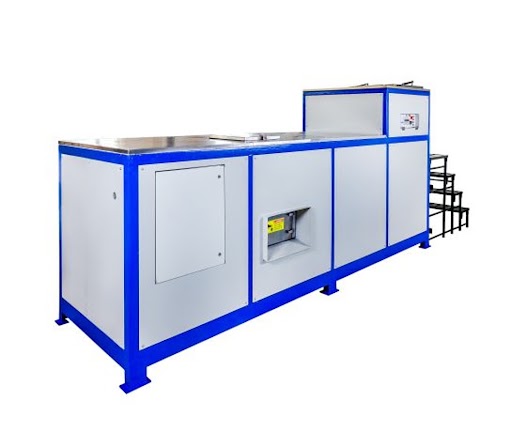
Smart Xpress Composter for hotels, banquets and commercial kitchens
How Should You Size the Machine for Peak Season?
Size for your busiest days, not your average. For two or three weeks of peak bookings, weigh your organic waste after every event and note the highest daily figure. Share this number, along with your off-season average, with the supplier. A well-sized compost maker machine should handle your peak load comfortably without sitting idle for the rest of the year.
.
What Are the Benefits for Banquet Halls and Caterers?
On-site composting pays back in several ways:
- Lower disposal costs: Less waste needs to be collected and transported.
- Cleaner premises: No overflowing bins, flies or odour near guests.
- Compliance: Easier reporting under the 2026 rules.
- Green credentials: Eco-conscious couples and corporate clients value venues that manage waste responsibly.
Well-chosen solid waste management machinery also gives you free compost for your own lawns and gardens.
Frequently Asked Questions
Can oily and gravy-rich food waste be composted?
Yes, in moderation. Drain excess liquid, add sawdust or dry leaves to absorb moisture and avoid large quantities of meat and bones.
Can marigold flowers from weddings be composted?
Yes. Remove threads, wires, foil and plastic first, then add the flowers with your kitchen waste.
Is my banquet hall a bulk waste generator?
It is if you generate 100 kg or more of waste per day, use 40,000 litres or more of water per day, or have a floor area of 20,000 square metres or more.
Conclusion
The wedding season brings business, and with it, a lot of waste. Segregate at source, process wet waste on-site and choose a composter machine sized for your peak. Your venue stays clean and compliant and earns a greener reputation with every celebration.